Loading...
Please wait while we load the content...

Loading...
Please wait while we load the content...
Loading...
Please wait while we load the content...
Explore peer - reviewed titles across the humanities and social sciences - rigorous research, fresh perspectives, and scholarship that inspires dialogue across disciplines.
Stay informed about our latest publications, calls for proposals, author news, events, and special announcements.
Join our community of scholars, librarians, authors, and readers and receive the latest updates from Vernon Press directly in your inbox.

From special discounts and global distribution partners to downloadable catalogs, flyers, and high-resolution covers, we make it easy to enrich your library’s collection. Access bibliographic data, explore subject-specific listings, and stay updated on forthcoming titles.
Become part of our librarian network and access dedicated tools, discounts, and resources to support collection development and promote new titles to your patrons.

Partner with Vernon Press to provide your customers with high-quality, peer-reviewed scholarship. We offer flexible ordering options, reseller agreements, and promotional materials to support your sales and outreach.

Vernon Press provides dedicated resources to help instructors adopt our books for courses and to support students with affordable access to high-quality scholarship. From desk and examination copies to tailored student editions, we aim to make our titles accessible in the classroom.
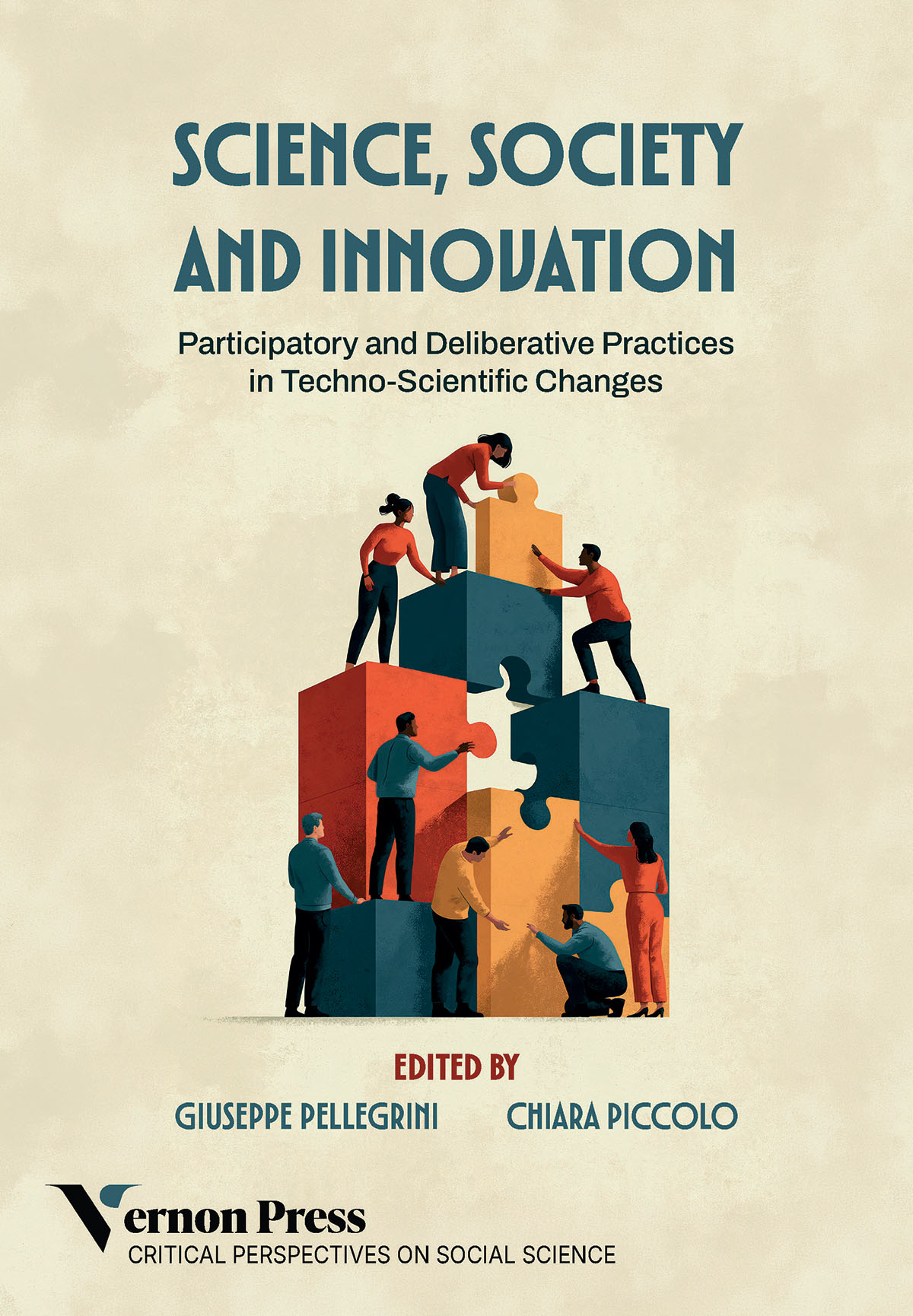
Participatory and Deliberative Practices in Techno-Scientific Changes
Edited by: Giuseppe Pellegrini (Observa E.T.S.) and Chiara Piccolo (University of Udine, Italy)
In modern societies, rapid scientific and technological change is deeply intertwined with human action, creating demand for public engagement to ensure democratic legitimacy and social robustness. Innovation is a complex, multidirectional process shaped by social, cultural, and political factors. This book examines citizen engagement in science and technology, asking how much room exists for it, what forms of democracy support it, what practices exist, and what impacts they have. Using case studies from Europe, Chile, and India, the book explores participatory and deliberative processes—such as citizens’ assemblies, energy transition initiatives, and AI governance—arguing that traditional representative democracy is insufficient for governing technoscientific challenges. It highlights the potential of these practices to foster mutual learning, reflexivity, and socially robust innovation. Key pillars include actors, communication processes, and evaluative dimensions. Case studies reveal both strengths (e.g., enhanced relevance, knowledge democratization) and weaknesses (e.g., power imbalances, tokenism). The book serves as a practical guide to distinguishing genuine participation from opportunistic use, offering conditions for effectiveness such as resources, trust, and recognizing citizens as active co-creators. Ultimately, it aims to provide a nuanced overview of strategies, outcomes, and contradictions in this evolving field.
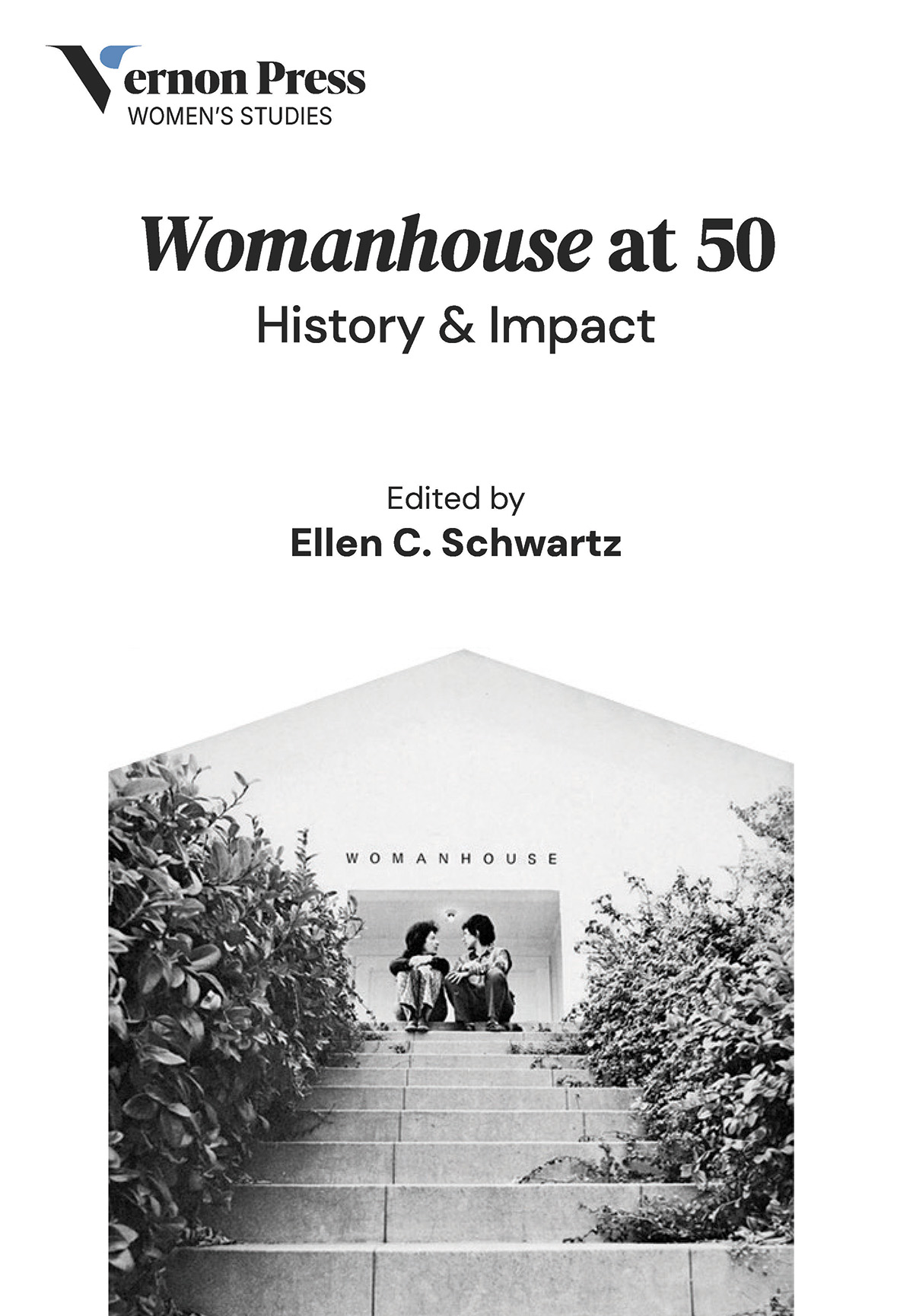
History & Impact
Edited by: Ellen C. Schwartz (Eastern Michigan University)
This illustrated volume brings together a wide variety of perspectives on the historic installation, 'Womanhouse' (1972). The introduction discusses the background and creation of this first whole-house feminist installation, a class assignment for the Feminist Art Program in the newly established California Institute of the Arts under the direction of Judy Chicago and Miriam Schapiro. Two of the original artists offer remembrances and speak to the project’s impact on their long careers of artmaking. Artistic descendants of the exhibition are discussed: these include whole-house installations which respond to the original, expanding the conversation by including artists of differing races, ethnicities, and gender expressions, and several iterations which served various roles in their communities. Two shows in galleries commemorating 'Womanhouse' and its artistic offspring are also considered. Next, several contemporary artists present their work and discuss how it relates to 'Womanhouse' and the questions it raised. Finally, a contemporary re-imagining of 'Womanhouse' is offered, giving a contemporary take on the historic exhibition. While much has been written about the original exhibition, rarely have we heard from some of the original artists about how their participation affected their careers and artistic output. In addition, this volume offers information on some of the descendant exhibitions. Discussion of these and their impact in the communities housing them underscores the importance of 'Womanhouse' in the lives of women in the years since 1972. Consideration of shows in galleries highlights the difference between them and the house installations. Reactions of contemporary artists offer new insight into the longevity of the original. And a contemporary re-imagining of 'Womanhouse' surprises the reader with unusual additions and re-evaluations.
Vol. 2: A Survey of Ecopoetics
Edited by: Adam Vincent (Capilano University) and Lee Beavington (Kwantlen Polytechnic University)
This second volume in the 'Poetic Inquiry Atlas' series continues the mapping of the first edition by bringing together a collection that represents some of the diverse uses of ecopoetics across various fields of research and study and explores poetry as a form of environmental geography. With chapters from scholars from diverse ecosystems across the globe, this book highlights both generative and epistemological uses of Poetic Inquiry. Suitable for researchers, educators, poets, ecologists and those who wish to better understand the connection between humans and the world that we live in, this book adds to what is known about Poetic Inquiry, ecology, and about lived experiences in/with nature from both non-Indigenous and Indigenous poets and scholars alike.

Faculty Perspectives on Immersive Research and Study Abroad in the African Diaspora
Edited by: Clarence George III (Sacramento State University) and Juan Maefield (University of Central Arkansas)
No description available
From F. Scott Fitzgerald to Marisa de los Santos
By: Henryk Hoffmann
In order to explain the concepts related to film reception and perception—such as screen personality, image, persona, identification-projection and subjective perception—theorists and lecturers usually ask the readers or audiences to imagine a hypothetical situation involving a screening of a certain film. They do not realize or forget that it would be much easier to use a situation already existing, created, for instance, by a talented and knowledgeable novelist or poet in the form of film references or allusions. So, here it is, the movie world—films, directors, actors, characters, particular scenes or lines—as perceived and commented on by some of the greatest authors and characters they have created in the pages of their novels, short stories, plays and poems. The main body of the book, consisting of nearly forty entries, is divided into three parts: mainstream fiction, represented by F. Scott Fitzgerald, James Jones, John Updike, Paul Auster and Marisa de los Santos; crime and mystery fiction—including such authors as Raymond Chandler, Elmore Leonard, Lawrence Block and Laura Lippman; and thriller/horror fiction, covering two unquestioned masters, Dean Koontz and Stephen King. A dozen more writers—e.g., Kurt Vonnegut and Jill McCorkle—whose contribution to the topic is somewhat less spectacular but still worth presenting, are briefly discussed, as entries of an intentionally limited scope, in the Appendix. In addition to providing precious observations corroborating the legendary status of some distinguished film directors and actors, as well as the assets of their most representative pictures, the analyses of the outstanding film references explain and ingeniously illustrate the major concepts related to film reception/perception studies and, more importantly, they demonstrate how some writers use references to enhance or embellish their poetic and/or narrative devices in such areas as character development, analogy within the plot or description of a specific period or location.
By: Erwin James Casareno
'A Materialist Social Theory of the Idea' advances a unified theoretical framework for understanding how ideas emerge, circulate, and materialize in the world. Rejecting both classical Idealism and reductive Materialism, the book develops a neuromaterialist approach that defines ideas as physically instantiated patterns of neural activity and traces their effects across social, institutional, and material domains. Beginning from the premise that thought is a biological process, the book follows the idea from its origin in the brain through its transmission via language and behavior, its reproduction within culture, and its eventual crystallization in norms, institutions, and physical structures. This recursive process—linking brain, behavior, environment, and social organization—provides a comprehensive model of how ideas function as causal forces in history. Drawing on insights from sociology, philosophy, neuroscience, and political theory, the work introduces original conceptual tools, including models of ideational transmission, activation, and threshold dynamics, as well as the concept of cognitive terraforming to describe the large-scale transformation of reality through ideation. This book offers an interdisciplinary framework for analyzing ideology, social change, and institutional development, making it relevant to scholars and students in social theory, sociology, philosophy of mind, and related fields. It also provides a foundation for further research into the material basis of thought and its role in shaping human behavior and social structure.
Edited by: Brian Gran (Case Western Reserve University)
'Human Rights and Social Concerns' brings together scholars who examine how human rights frameworks illuminate, and sometimes fail to address, pressing social concerns across diverse societies. Contributors explore issues including migrant women’s experiences of street harassment (Valeria Bonatti and Ashley C.F. Hutson), stigma and disability in rural India (Namita Gupta and Pardeep Kumari), environmental licensing and justice in Brazil (Cassia Cardoso de Miranda), constitutional over‑regulation of families (Ágne Lux and Emese Pásztor), and the paradoxical role of human rights in environmental degradation (Haimo Schulz Meinen).
Teaching and Acquisition in Higher Education. Vol. 2
Edited by: Alberto Regagliolo (UKSW University)
'Italian as a Foreign Language: Teaching and Acquisition in Higher Education. Vol. 2' brings together twelve chapters written by scholars and university lecturers, all focusing on the teaching of Italian through a wide range of approaches. These range from inclusive and multisensory pedagogies to corpus-based learning, from grammar through use to debate-based teaching and content-focused courses (politics, ecology, food, health, culture, and identity). The book values plurality and dialogue, showing how different pedagogical perspectives can respond to diverse learning contexts and heterogeneous student profiles. What makes this volume distinctive is its strong connection between theory and practice. Each contribution is grounded in current research in applied linguistics and language pedagogy, while remaining firmly rooted in real university classrooms. Practical examples, teaching ideas, and reflections on course design make the book particularly useful for university instructors, teacher educators, and advanced students. At the same time, the volume can be read as a source of inspiration, as a methodological guide, or as a reference text for developing inclusive and meaningful Italian language courses in higher education.
Social Media and Youth Activism
By: Monica Pauls (Mount Royal University)
Young people’s lives are increasingly shaped by digital media, yet public and academic debates about youth, social media and well-being are often dominated by fear-based narratives that frame online spaces as inherently harmful. Against a backdrop of rising concerns about youth mental health and widespread anxieties about social media use, this book offers a critical and timely intervention into how we understand young people’s political and civic engagement in the digital age. Drawing on in-depth interviews with youth activists involved in the international climate change movement and the American gun control movement, alongside analysis of their social media practices, the book challenges binary distinctions between online and real-world activism. Rather than treating digital participation as superficial or ineffective, it foregrounds young people’s own perspectives on activism, demonstrating how digital platforms function as meaningful spaces for connection, organizing and political expression. Situated at the intersection of youth studies, sociology, media studies and political engagement, the book builds on and extends existing literature on digital activism by centring youth voices and lived experience. It offers a counter-narrative to the persistent “slacktivism” critique, arguing that such framings not only misunderstand contemporary activism but risk delegitimizing young people’s contributions to civic life. Written in an accessible style while grounded in rigorous social research, this book will be of interest to scholars, post-secondary students and practitioners working in education, youth work, child and youth care, social services and community organizing. It is suitable for classroom adoption, scholarly reference and professional reflection, and provides valuable insights for anyone seeking to better understand how young people are reshaping political participation in a digitally networked world.