Loading...
Please wait while we load the content...

Loading...
Please wait while we load the content...
Stay informed about our latest publications, calls for proposals, author news, events, and special announcements.
Join our community of scholars, librarians, authors, and readers and receive the latest updates from Vernon Press directly in your inbox.
Availability
In stock
ISBN
9798261600916
Edition
1
Publication Date
August 25, 2026
Physical Size
236mm x 160mm
Illustrations
24 B&W
Number of Pages
308
Currency
Quantity
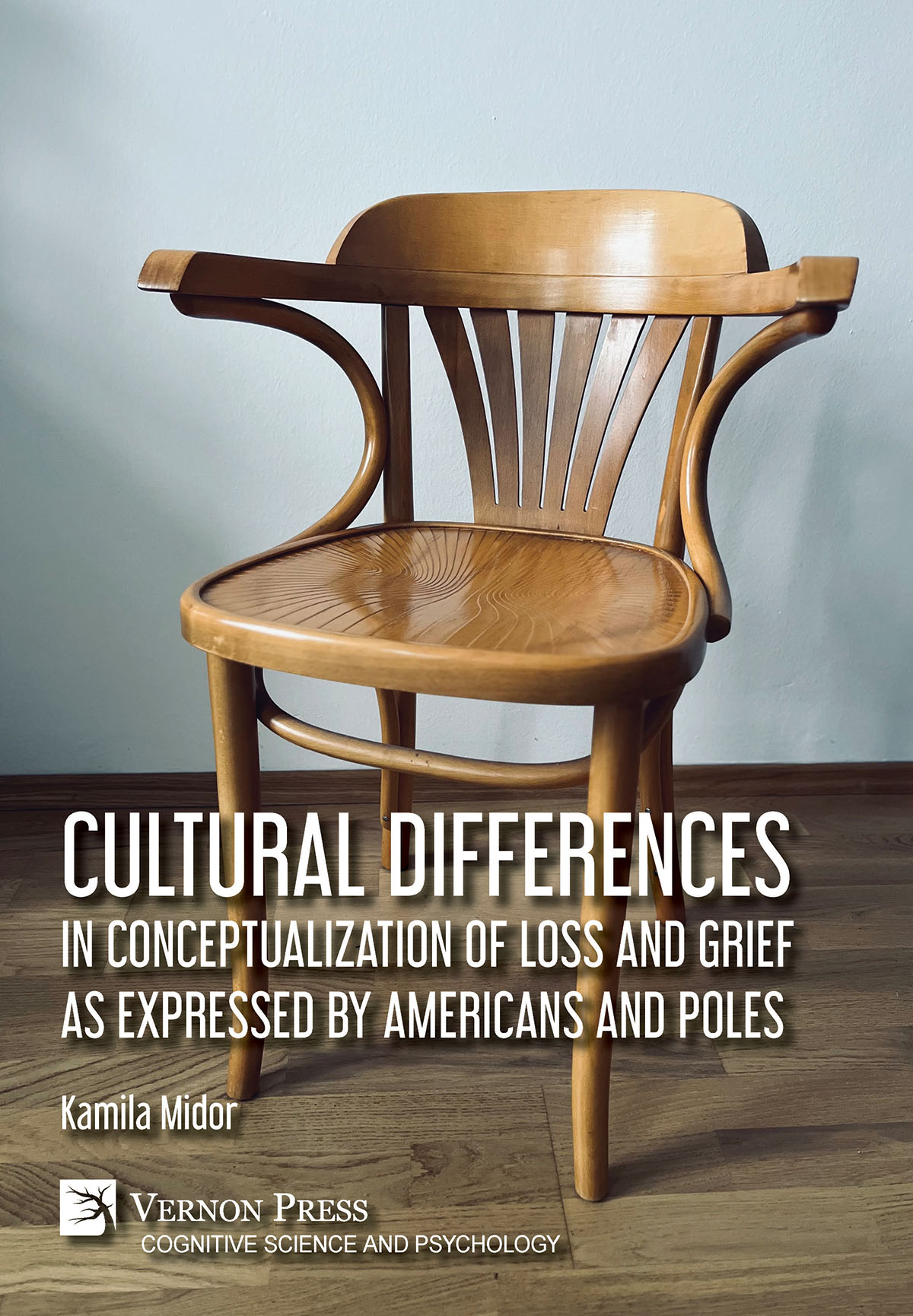
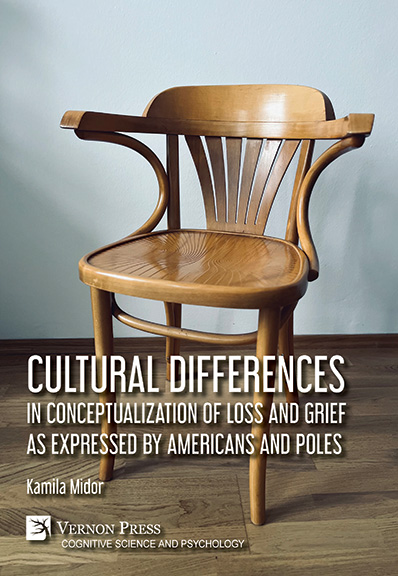
Expertly using the toolkit of cognitive linguistics, Kamila Midor describes how Americans and Poles talk and think about loss and grief. In doing so, she provides us with deep insight into the forces that shape the ways they construct and experience these unavoidable aspects of the human condition.
Dr. Zoltán Kövecses
Professor emeritus
Eötvös Loránd University, Hungary
Grief is an experience that unites us across cultures, languages, and histories. Yet the words we choose to describe loss profoundly shape how we understand, express, and ultimately integrate it. Kamila Midor offers a thoughtful and illuminating exploration of the metaphors of grief in Polish and American English, revealing both the cultural nuances that distinguish us and the universal threads that connect us. By showing how language constructs our narratives of loss, this work enriches not only our understanding of linguistics but also our capacity for empathy. This is a thoughtful, compassionate, and important contribution to our understanding of grief, language, and what it means to be human.
Anja Franczak
Founder of the Instytut Dobrej Śmierci (Institute of the Good Death) and President of the Management Board of the Instytut Dobrej Śmierci foundation, Poland
Kamila Midor offers a compelling cross-cultural account of how Americans and Poles conceptualize loss and grief. She bridges metaphor and blending theory with bereavement psychology to demonstrate how shared metaphorical patterns function alongside important cultural differences. Besides contributing to cognitive linguistics and health communication research, this book has clear relevance for professionals who support bereaved people.
Dr. Dennis Zhiming Tay
Professor
Division of Humanities
The Hong Kong University of Science and Technology, China
In this engaging and compelling book, Kamila Midor explores how Americans and Poles conceptualise and communicate experiences of loss and grief. Grounded in a combination of metaphor analysis and blending theory, her work offers a thoughtful investigation of bereaved people’s experiences, deepening our understandings of grief and loss and illuminating the role of culture in their conceptualisation and expression. It is sure to be of relevance not only to cognitive linguists, but to thanatologists, bereavement support professionals, and anyone with an interest in how we make sense of and communicate our experiences.
Dr. Sarah Turner
Centre for Arts & Creative Cultures
Coventry University, UK
Discover books that expand on the themes explored in this work—titles that engage with similar questions, intersecting disciplines, and complementary perspectives to deepen understanding and broaden the conversation.
Browse all titles
André Dodeman and Nancy Pedri (Eds.)
View more
Laura M. Pipe and Jennifer T. Stephens (Eds.)
View more