Loading...
Please wait while we load the content...

Loading...
Please wait while we load the content...
Stay informed about our latest publications, calls for proposals, author news, events, and special announcements.
Join our community of scholars, librarians, authors, and readers and receive the latest updates from Vernon Press directly in your inbox.
Availability
In stock
ISBN
9798261600787
Edition
1
Publication Date
August 4, 2026
Physical Size
236mm x 160mm
Number of Pages
342
Currency
Quantity
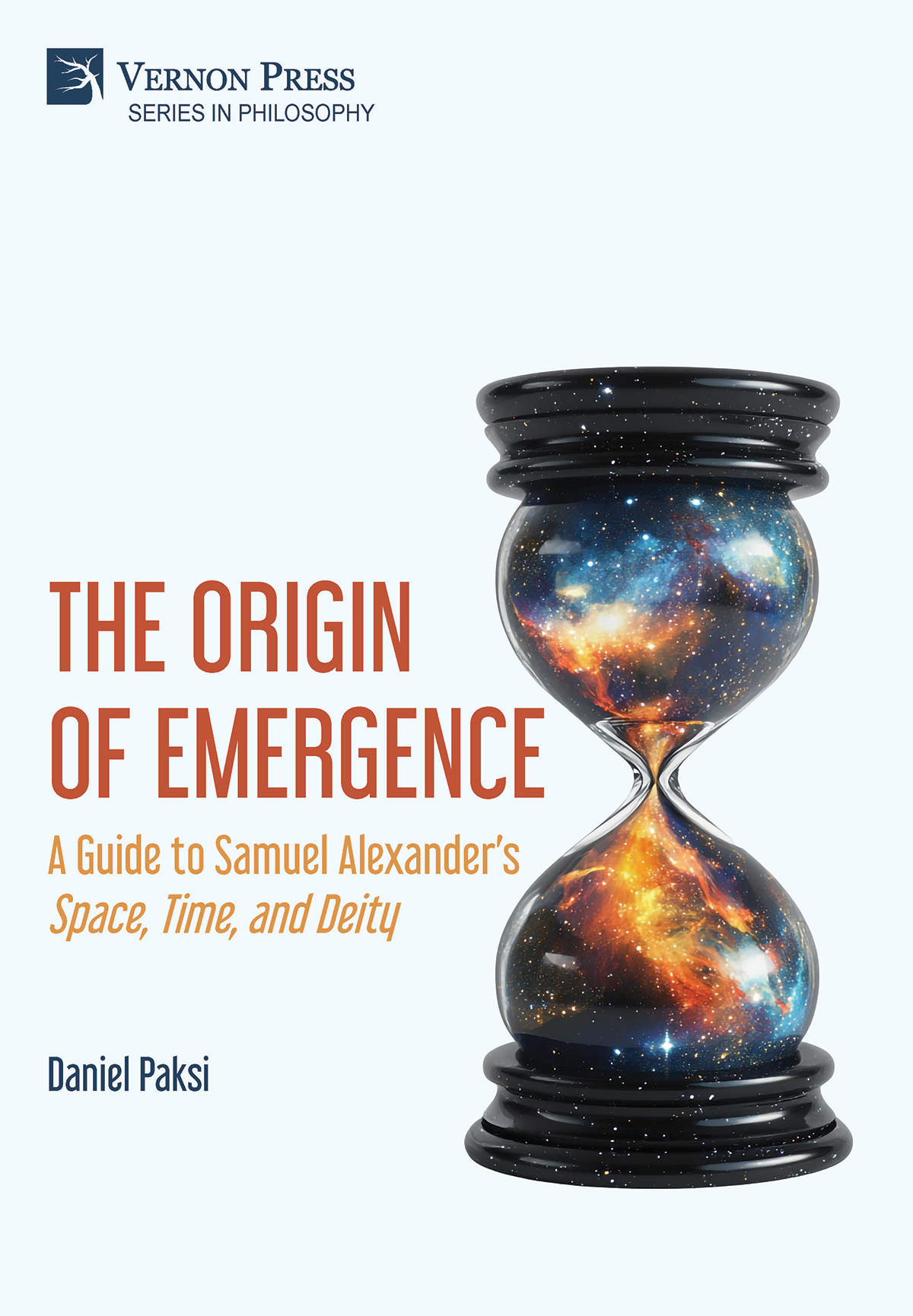
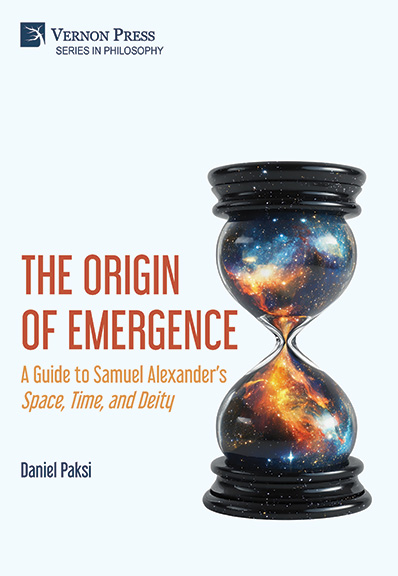
The universe evolves from a singularity of Space-Time. Life evolves from a singular replicative cell. Mind evolves in a singular living body in every individual case. We are living in an evolving universe. The concept of emergence tries to express the point of this process we can see everywhere. This is the reason that it has become so widespread both in philosophy and science. However, the use and meaning of the concept are quite different in the various fields; we have no real understanding of what the emergence of the universe or life means. The concept of emergence stems from Samuel Alexander’s 'Space, Time, and Deity' (1920). However, no one reads Alexander anymore and thus no one is familiar with the original concept. On the contrary, we often use it in an exactly opposite sense. For example, Lee Smolin, a physicist, to propose a solution for the problems of contemporary physics, writes in his book 'Time Reborn' that the only thing in the universe which is not emergent is Time. However, according to Alexander, we are living in an evolving universe because Time is emergent and the fundament of existence is Space-Time. Time is the ordering principle of change and emergence; there is nothing more. The universe starts with the first manifestation of Time in Space, that is, by a singularity of Space-Time. Matter, life, and mind are all unfolding developments of this process. Every thing or being in the universe is but an emergent spatiotemporal complex. We die because our (biological) time is, in the literal sense, gone. The goal of this book is to present the original concept of emergence in the twenty-first-century modern context, which no one has ever done before, and show that it is perfectly coherent with the scientific discoveries of the last century.
Discover books that expand on the themes explored in this work—titles that engage with similar questions, intersecting disciplines, and complementary perspectives to deepen understanding and broaden the conversation.
Browse all titles