INDEPENDENT PUBLISHER OF BILINGUAL SCHOLARLY BOOKS IN THE HUMANITIES AND SOCIAL SCIENCES

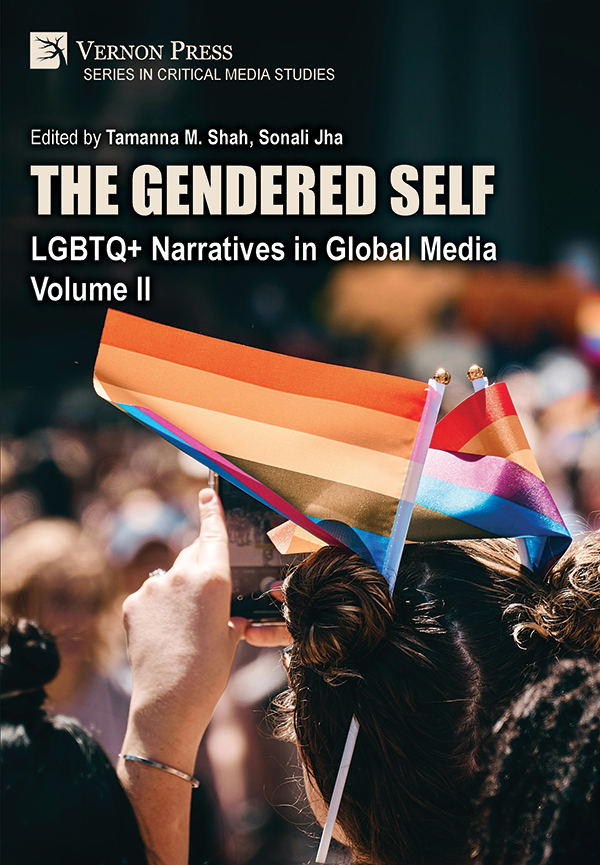
The Gendered Self: LGBTQ+ Narratives in Global Media, Volume II

Tamanna M. Shah, Sonali Jha (Eds.)

by Kazım Tolga Gürel , Sonali Jha (Ohio University), Sarah E. Page (East Carolina University), Yang Yang (Education University of Hong Kong, China), Yuxuan Mu (University of South Florida), Niveditha Jayaraj (Queen Mary’s College, Mylapore, Chennai), G. Sadhana (Queen Mary’s College, Mylapore, Chennai), Mabel Gardner (Western University, London, Ontario, Canada)

Purchase this book

Hardback
$ 97
Availability: In stock
currency displayed based on your location
(click here to change currency)

These volumes by Tamanna Shah and Sonali Jha bring together scholars from across the world. By including academic research on LGBTQ+ identities from a diverse range of contexts, societies, and cultures, these volumes not only help develop a global perspective on this area of research but also recognize a global community of scholars with important and meaningful academic voices. 

Jatin Srivastava
Professor and Associate Director of Graduate Studies
Director, Institute for International Journalism
E. W. Scripps School of Journalism
Ohio University

'The Gendered Self: LGBTQ+ Narratives in Global Media, Volume II' challenges the restrictive frameworks that have long defined gender and sexuality. Moving beyond simplistic dichotomies, this volume explores how LGBTQ+ identities are shaped, represented, and contested across diverse cultural, historical, and political contexts. Through case studies from Turkey, the United States, China, and India, contributors reveal the lived complexities of queer experience. Chapters trace transgender journeys of identity transformation, dissect the weaponization of queer bodies in moral panics, and analyze the digital self-representations of Chinese gay men. Others investigate how Indian OTT platforms and Malayalam cinema expand space for queer narratives, while historical accounts of activists like Paula Grossman illustrate the fraught relationship between representation, activism, and backlash. Across these explorations, the volume highlights how media, politics, and cultural traditions simultaneously affirm and erase queer lives. It uncovers the deep roots of erasure in mythology and religion, while also showing how digital platforms and popular culture create new opportunities for resistance and recognition. This collection insists that the “gendered self” must be understood as fluid, intersectional, and culturally situated, pushing readers to reimagine identity beyond binaries and toward broader visions of inclusion and justice.

List of Tables
Introduction: Beyond Binaries and Cultural Constructions of LGBTQ+ Identities
Tamanna M. Shah
Ohio University
Sonali Jha
Ohio University
Chapter One
Transgender Identity Transformation Process in Turkey
Dr. Kazım Tolga Gürel
Independent Scholar
Chapter Two
‘Over My Dead Body!’: Queer Bodies Trapped in the Crosshairs of (Another) Moral Panic
Dr. Sarah E. Page
East Carolina University
Chapter Three
Understanding Self-Representation and Desires for the Other: A Multi-Perspective Exploration of Online Dating Discourse from Chinese Gay Men
Yang Yang
Education University of Hong Kong
Yuxuan Mu
University of South Florida
Chapter Four
Liberating Narratives: Gender Intersectionality in Indian OTT Platform
Sonali Jha
Ohio University
Chapter Five
The Significance of Queer Representation in Media: An Exploration Through the Lens of Malayalam Movies
Niveditha Jayaraj
Queen Mary’s College, Mylapore, Chennai
Dr. G. Sadhana
Queen Mary’s College, Mylapore, Chennai
Chapter Six
From Trans-Normativity to Trans-Hysteria: Media Representations of Transgendered Activist Paula Grossman
Mabel Gardner
Western University, London, Ontario, Canada
About the Editors
About the Contributors
Index

Tamanna M. Shah is an Assistant Professor of Instruction in the Department of Sociology and Anthropology at Ohio University, USA. She is a Curriculum Writing Fellow at Harvard University. She serves as an Experiential Learning Community-of-Practice Fellow and a Global Learning Fellow with the Provost’s Office at Ohio University. She is the Book Reviews Editor for Sociological Research Online. She earned her Ph.D. in Sociology from the University of Utah and holds a Master’s degree in Sociology from Kansas State University and a Bachelor’s degree in Economics. She has conducted field research in Kashmir, India, and East Timor. Her interests include comparative political sociology, gender and race, social change, and inequality. She is the author of 'Children and Youth as "Sites of Resistance" in Armed Conflict' Volumes I and II, which are part of the ASA section on Children and Youth. She has authored several other publications, including “Adjustment to Divorce (Spouses)” for the 'Wiley Blackwell Encyclopedia of Family Studies' and “Chaos and Fear: Creativity and Hope in an Uncertain World” in 'International Sociology.' She has collaborated with the Asian Development Bank on water and sanitation policy papers. (ORCID: 0000-0001-9609-0191)

Sonali Jha is a Ph.D. Candidate at Ohio University in the School of Media Arts and Studies. She holds a Bachelor’s (Banaras Hindu University) and a master’s degree (Central University of Jharkhand) in English Literature from India. Her work as a content writer in the marketing industry has equipped her with practical insights into media dynamics. However, her passion for community engagement truly sets her apart. Sonali’s research focuses on critically analyzing media and social media usage inequalities. She has published research papers on trafficking and migration and is currently working on her dissertation, which focuses on the role of media and intervention programs in combating human trafficking. Her research interests include, but are not limited to, understanding the significance of comedy in raising social awareness, health communication, framing, agnotology, human trafficking, and community-based and action research. Her research aims to create knowledge in service that effectively initiates social change for justice and equity.

Intersectionality,media representation,gendered self,empowerment,social justice,LGBTQ+ Identity

SSL