Loading...
Please wait while we load the content...

Loading...
Please wait while we load the content...
Stay informed about our latest publications, calls for proposals, author news, events, and special announcements.
Join our community of scholars, librarians, authors, and readers and receive the latest updates from Vernon Press directly in your inbox.


Availability
In stock
ISBN
9781648895456
Edition
1
Publication Date
January 10, 2023
Physical Size
236mm x 160mm
Illustrations
17 B&W
Number of Pages
260
Currency
Quantity
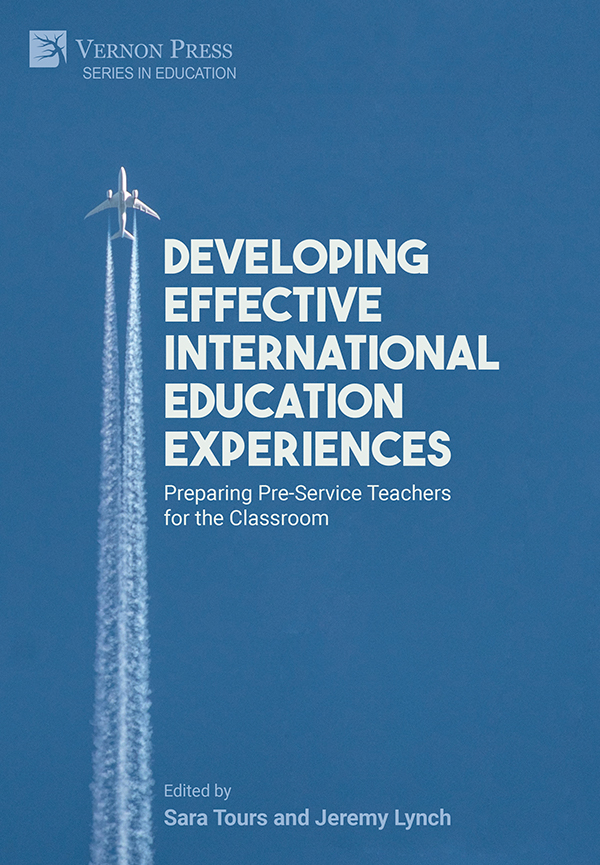
Globally, and within the United States, we continue to progress toward a more diverse and inclusive culture. This fact is perhaps reflected nowhere better than in the public school system in the United States, where, by 2029 (NCES, 2020), non-white students will outnumber white students in classrooms. The challenges that the current system of education confronts in ensuring equitable access and equal achievement are also well-documented (Darling-Hammond, 2015). A key component in the re-shaping and development of a more equitable and inclusive system are the pre-service teachers enrolled in our college and university teacher preparation programs across the country. As we prepare for the diverse classrooms of the future, we need to prepare the teachers of the future to not only be able to teach all students but to also have the cultural competencies to ensure the same access and opportunities are provided to all students. It has been well documented (Cunningham, 2015; Lupi & Turner, 2013) that international education experiences, or international field experiences, have a positive effect on both the professional development and cultural competencies of pre-service teachers. Across a wide range of performance outcomes, pre-service teachers with international field experiences are better equipped to enter the field (DeVillar & Jiang, 2012) and may even persist longer in the profession (Egeland, 2016). However, not all international experiences provide the same positive outcomes. In this book, we will explore the importance of developing culturally competent educators in the United States education system, the research that supports the benefits of international education experiences, and how to develop effective international education experiences that will prepare pre-service teachers for the classrooms of the next decade and beyond.
Discover books that expand on the themes explored in this work—titles that engage with similar questions, intersecting disciplines, and complementary perspectives to deepen understanding and broaden the conversation.
Browse all titles
Karim Dharamsi and David Ohreen (Eds.)
View more
Mitchell B. Mackinem, Lacey J. Ritter, and Anisah Bagasra (Eds.)
View more