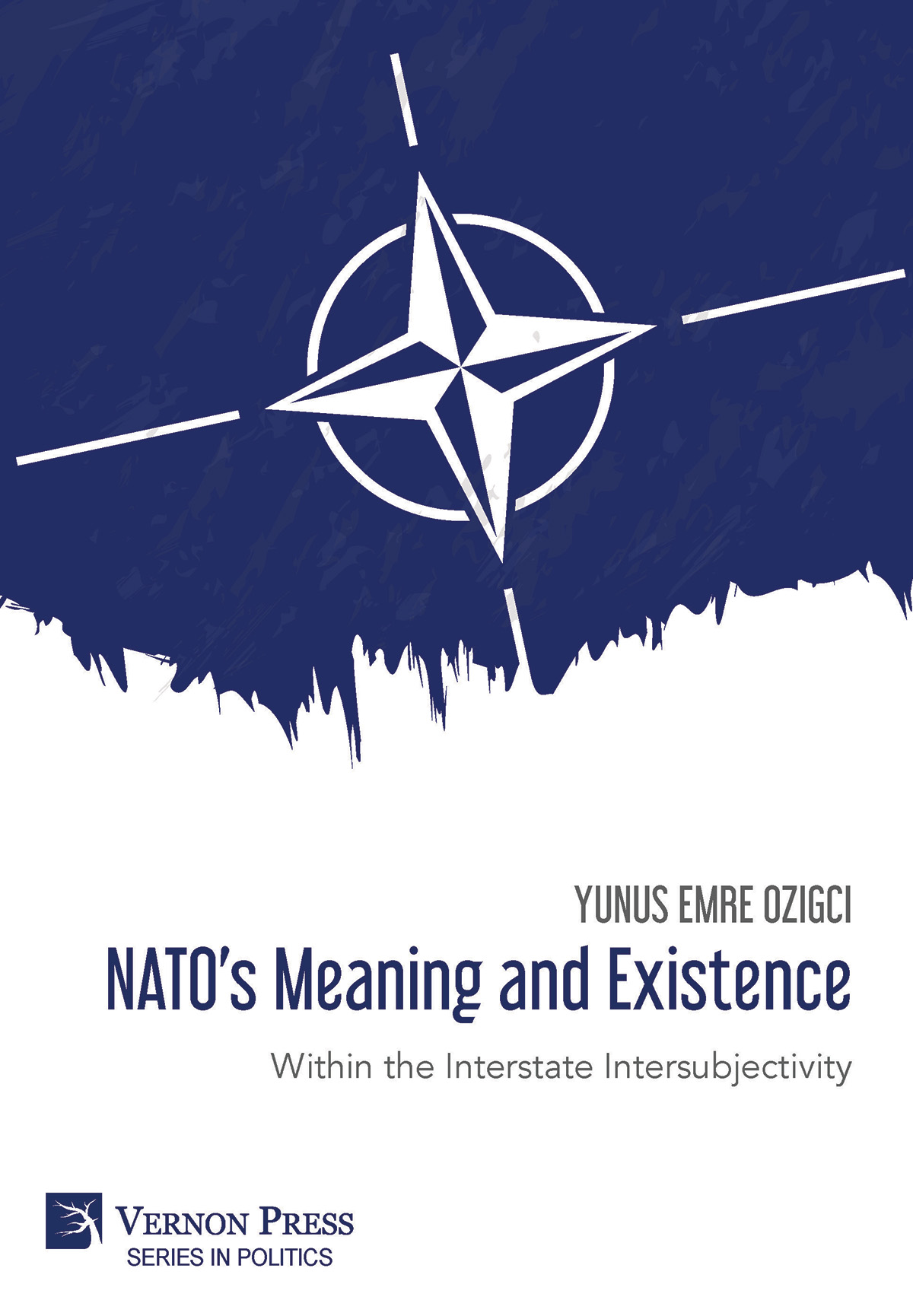
We are pleased to announce that 'NATO’s Meaning and Existence: Within the Interstate Intersubjectivity' by Yunus Emre Ozigci, Ministry of Foreign Affairs of the Republic of Turkiye (Turkey) has been reviewed by Piotr Pietrzak in ‘Journal of Liberty and International Affairs’ 12 (1):200-203:
[…] His “NATO’s Meaning and Existence” (2026), like his previous publications, does not follow the standard script of recycled, uninspiring solutions drawn from outdated textbooks to address contemporary problems. Instead, it offers genuine insight into modern foreign policy, informed by decades of diplomatic experience: he currently serves in Turkey’s diplomatic corps in one of the most geostrategically significant regions of Africa. This book provides a contemplative critique of NATO’s nature, in contrast to conventional political textbooks that often repeat flattering slogans without critical reflection. […]
[Extract from book review on the ‘Journal of Liberty and International Affairs’ 12 (1):200-203. Reviewer: Piotr Pietrzak. https://doi.org/10.47305/jlia.2026.2126]
Find out more about the book and order your copy here: 'NATO’s Meaning and Existence: Within the Interstate Intersubjectivity'
Entities, events, phenomena and states of affairs of the sphere of international relations/ interstate interactions are purely intersubjective recognisances. Their “subjects”, in particular the States, are themselves pre-theoretically, intersubjectively co-constituted and temporalised, ascribed with subject qualities especially in their “interactions” and experienced as such through intentional acts of perceiving, defining, remembering, anticipating, judging and so on. The said ascription includes their own community-building dynamics within an also intersubjectively given environment of interstate interactions. NATO is one of the most prominent State-communities. It has not only been defined by but has also been a constituent of the environment in which it existed. It gained its meaning from its existential relationship with its constituent State-subjects, its interactional counterparts and the meaningful appearance of its “environment”, and also made part of their meaningful appearances. NATO existed through transformations of environment and counterpart(s), continuing to be valid and viable in different identities and temporalisations. It is currently being re-identified and re-temporalised face to a new transformation of the interstate environment.
Studying NATO requires co-studying its constituents, counterparts and environment in their substances and temporal states as they are given pre-theoretically, immediately, intersubjectively, which form parts of an expanded, existential kind of reality lived and lived-within by true subjects, replacing the objectivity in its narrow sense with meaningfulness, appearing as objectivity itself on the ground of a universal, pre-theoretical, immediate familiarity and intelligibility ground. Studying NATO “as is” in its identities and temporalisations with its environment, constituents and counterparts requires access to that pre-theoretical ground of meaningful, intersubjective appearances. Here, phenomenology and the phenomenological ontology offer useful concepts and tools which, due to the particular nature of the IR field, complement each other for conducting such a study of the “being and time” of NATO.