Loading...
Please wait while we load the content...

Loading...
Please wait while we load the content...
Loading...
Please wait while we load the content...
Explore peer - reviewed titles across the humanities and social sciences - rigorous research, fresh perspectives, and scholarship that inspires dialogue across disciplines.
Stay informed about our latest publications, calls for proposals, author news, events, and special announcements.
Join our community of scholars, librarians, authors, and readers and receive the latest updates from Vernon Press directly in your inbox.

From special discounts and global distribution partners to downloadable catalogs, flyers, and high-resolution covers, we make it easy to enrich your library’s collection. Access bibliographic data, explore subject-specific listings, and stay updated on forthcoming titles.
Become part of our librarian network and access dedicated tools, discounts, and resources to support collection development and promote new titles to your patrons.

Partner with Vernon Press to provide your customers with high-quality, peer-reviewed scholarship. We offer flexible ordering options, reseller agreements, and promotional materials to support your sales and outreach.

Vernon Press provides dedicated resources to help instructors adopt our books for courses and to support students with affordable access to high-quality scholarship. From desk and examination copies to tailored student editions, we aim to make our titles accessible in the classroom.
From F. Scott Fitzgerald to Marisa de los Santos
By: Henryk Hoffmann
In order to explain the concepts related to film reception and perception—such as screen personality, image, persona, identification-projection and subjective perception—theorists and lecturers usually ask the readers or audiences to imagine a hypothetical situation involving a screening of a certain film. They do not realize or forget that it would be much easier to use a situation already existing, created, for instance, by a talented and knowledgeable novelist or poet in the form of film references or allusions. So, here it is, the movie world—films, directors, actors, characters, particular scenes or lines—as perceived and commented on by some of the greatest authors and characters they have created in the pages of their novels, short stories, plays and poems. The main body of the book, consisting of nearly forty entries, is divided into three parts: mainstream fiction, represented by F. Scott Fitzgerald, James Jones, John Updike, Paul Auster and Marisa de los Santos; crime and mystery fiction—including such authors as Raymond Chandler, Elmore Leonard, Lawrence Block and Laura Lippman; and thriller/horror fiction, covering two unquestioned masters, Dean Koontz and Stephen King. A dozen more writers—e.g., Kurt Vonnegut and Jill McCorkle—whose contribution to the topic is somewhat less spectacular but still worth presenting, are briefly discussed, as entries of an intentionally limited scope, in the Appendix. In addition to providing precious observations corroborating the legendary status of some distinguished film directors and actors, as well as the assets of their most representative pictures, the analyses of the outstanding film references explain and ingeniously illustrate the major concepts related to film reception/perception studies and, more importantly, they demonstrate how some writers use references to enhance or embellish their poetic and/or narrative devices in such areas as character development, analogy within the plot or description of a specific period or location.
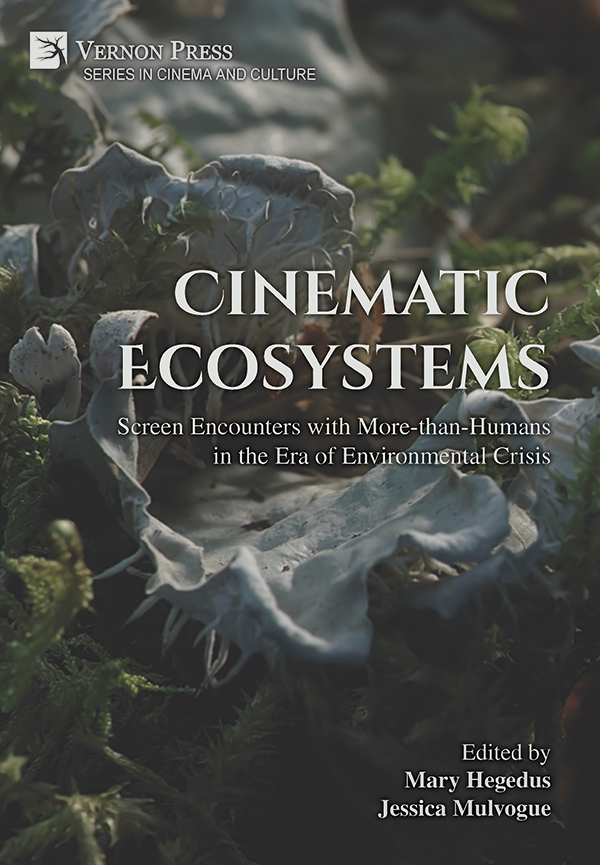
Edited by: Mary Hegedus (York University) and Jessica Mulvogue (University of St Andrews)
Motivated by the exigency of climate change, 'Cinematic Ecosystems: Screen Encounters with More-than-Humans in the Era of Environmental Crisis' takes cinema to be an audiovisual form whose creation and meaning are deeply connected to more-than-human worlds. As part of the third wave of ecocinema studies, this collection gathers contributions on multiple cinema forms from an international group of scholars and artists who offer diverse, critical perspectives that respond to the question: How does cinema help or hinder us in coming to know the more-than-human world? The collection homes in on the concept of the ecosystem as a biological and technological system that comprises a network of inter-relational living and their inanimate elemental affordances to explore encounters with cinema as a material object and practice, a spectatorial experience, and a representational text. The chapters cover environmental topics that span five continents and multiple histories. This book will be of special interest to film studies scholars and artists interested in cinema and climate change, environmental justice, and posthumanism.
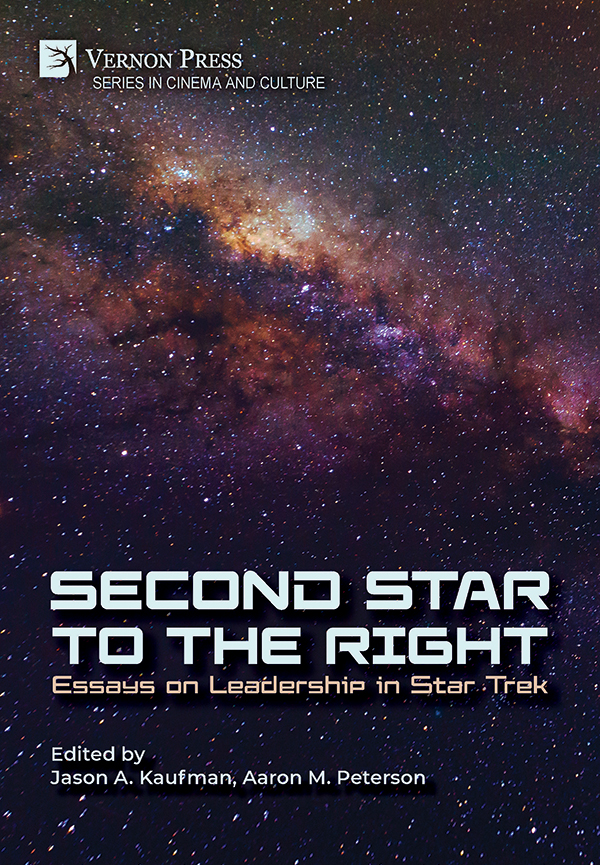
Edited by: Jason A. Kaufman (Minnesota State University, Mankato) and Aaron M. Peterson (Converse University)
'Star Trek' provides an opportunity to explore the final frontier of leadership through its nearly six decades of series and films. With its basis in Enlightenment thinking (reason coupled to compassion) and its encouragement of diversity in its myriad forms, 'Star Trek' offers guidance on how to improve the human condition that has application in leadership across academic and professional fields. Leaders are constantly called upon to solve problems, direct institutional growth, and, on occasion, even solve humanitarian crises. Leadership development need not be complicated or overly staid. It should be engaging. 'Star Trek' provides us a venue through which to make it so. This book explores the application of 'Star Trek' to the practice of leadership across a diverse array of professional and academic fields. 'Second Star to the Right: Essays on Leadership in Star Trek' provides a set of exceptional chapters from a diverse range of scientists, professionals, writers, and thinkers. It will help you to utilize the wealth of 'Star Trek' canon applied across a robust array of fields to broadly inform the practice of leadership for a better world.
By: Sertaç Timur Demir (Gümüşhane Üniversitesi, Turkey)
‘The City on Screen: Modern Strangers of Cinematic Istanbul’ attempts to analyze how Istanbul is captured through the projector; in other words, the ontological relationship between city and film and how it is elaborated within the context of Istanbul and the sense of strangerhood. This book shifts the axis of Istanbul, typically known as a touristic city, to its underlying details through the strangers in the modern city. Five different films set in this region are analyzed in the text that help to reveal and clarify the socio-urban life of modern Istanbul. The characters and stories in these films tell how Istanbul has socially and architecturally become a city of strangers. The films analyzed include ‘A Touch of Spice’ (2004), ‘Men on the Bridge’ (2009), ‘A Run for Money’ (1999), ‘Distant’ (2002), and ‘10 to 11’ (2009). The theoretical framework of this book is based on the works of Georg Simmel, Zygmunt Bauman and Richard Sennett. These three thinkers have all attempted to look for answers to the sociological question of strangerhood in urban living. This book accomplishes this connection by discussing the similarities and differences between each of their theories regarding the city, cinema and strangerhood.
Edited by: Emily Strand and Amy H. Sturgis
'Star Wars' is a global phenomenon that in 2022 celebrated its 45th year of transmedia storytelling, and it has never been more successful than it is today. More 'Star Wars' works than ever are currently available or in simultaneous development, including live-action and animated series, novels, comics, and merchandise, as well as the feature films for which the franchise is best known. 'Star Wars' fandom is worldwide, time-tested, and growing; academic interest in the franchise, both inside and outside of the classroom, is high. This accessible and multidisciplinary anthology covers topics across the full history of the franchise. With a range of essays by authors whose disciplines run from culture and religious studies to film, feminism, and philology, 'Star Wars: Essays Exploring a Galaxy Far, Far Away' speaks to academics in the field, students in the classroom, and anyone looking to broaden their understanding and deepen their appreciation for 'Star Wars'.
Edited by: Emily Strand and Amy H. Sturgis
After more than 55 years of transmedia storytelling, 'Star Trek' is a global phenomenon that has never been more successful than it is today. 'Star Trek' fandom is worldwide, time tested, and growing, and academic interest in the franchise, both inside and outside of the classroom, is high; at the moment, more 'Star Trek' works are underway or in development simultaneously than at any other moment in history. Unlike works that focus on a limited number of stories/media in this franchise or only offer one expert’s or discipline’s insights, this accessible and multidisciplinary anthology includes analyses from a wide range of scholars and explores 'Star Trek' from its debut in 1966 to its current incarnations, considers its implications for and collaborations with fandom, and trace its ideas and meanings across series, media, and time. 'Star Trek: Essays Exploring the Final Frontier' will undoubtedly speak to academics in the field, students in the classroom, and informed lay readers and fans.
Edited by: Rachel L. Carazo (St. Thomas University)
This volume adds to previous historical and political studies about 'Gladiator' with essays about the movie’s relation to pop culture and contemporary discourses. It not only relates 'Gladiator' to traditional cinema aspects such as heroism, music, acting, studio culture, and visual effects, but it also connects the film to sports, religion, and the environment, expanding the ways in which the film can be evaluated by modern audiences. The volume can be read by individuals or in classroom settings, especially as a recommended text for students studying the ancient world in film.
Edited by: Jorge Serrano (University of Delaware)
This interdisciplinary academic study is for readers interested in film, media, and the comic book genre. Superhero theories are abundant, especially considering their use as a tool for coping with adversity, and some note that it is an integral part of American society, young formative minds, in particular. It is not just about learning morals but also seeing how an ideal society should function and look. There are works that review superheroes and theories about comic book series adaptions in film and text, but the writers in this compendium engage not only with the film and the intersectionality of women, Asian culture, Du Bois, and even Greek Ajax and others for comparison but also comparative analysis of works that capture African and African diasporic representation throughout various historical time periods. The anthology presents discourse that engages a variety of assessments that involve questions of positive and pejorative representation. Educators will find this a useful tool for undergraduate students as well as general audiences interested in this popular film/comic series.
A Study in Film Perception Through References to Peck, Mitchum and Holden
By: Henryk Hoffmann
This book focuses on the perception of the names, personae, performances and films of three Hollywood megastars, Gregory Peck, Robert Mitchum and William Holden, as presented in the references and allusions encountered in American and foreign literature. Its secondary aim is to establish the ‘impact factor’ of the three actors and their major films and provide extensive data for further studies on the complex and bilateral relationships between film and literature. The pertinent quotations in ‘Three Hollywood Stalwarts in Literature: A Study in Film Perception Through References to Peck, Mitchum and Holden’ have been extracted from nearly 220 works by about 140 authors. The majority of the works were written by acclaimed authors; amongst them are some well-known American mainstream writers such as John Updike, John Irving, Fannie Flagg and Anne Tyler; some leaders of the mystery genre include Martha Grimes, Stuart Kaminsky, Elmore Leonard, Sara Paretsky; and a few masters of other popular genres, such as Stephen King and Dean Koontz. The global flavor of the citations is provided by international authors (e.g., Julio Cortázar, Elizabeth Hay, Henri Charrière, Sebastien Japrisot) and authors born to first-generation U.S. immigrants (e.g., Oscar Hijuelos). Almost seventy films referenced in world literature are discussed in the book, and those mentioned in the biggest number of works include ‘Sunset Boulevard’, ‘The Wild Bunch’, ‘To Kill a Mockingbird’, ‘Roman Holiday’, ‘Spellbound’, ‘The Guns of Navarone’, and ‘Duel in the Sun’, among others. This book will appeal to college professors and students interested in film studies, specifically film analysis and criticism, film perception, and film genres. It will also hold interest for the general reader interested in biographies of movie personalities and the careers of the three actors, movie and stage actors, and fans of the western, film noir, and war genres.