Loading...
Please wait while we load the content...

Loading...
Please wait while we load the content...
Loading...
Please wait while we load the content...
Explore peer - reviewed titles across the humanities and social sciences - rigorous research, fresh perspectives, and scholarship that inspires dialogue across disciplines.
Stay informed about our latest publications, calls for proposals, author news, events, and special announcements.
Join our community of scholars, librarians, authors, and readers and receive the latest updates from Vernon Press directly in your inbox.

From special discounts and global distribution partners to downloadable catalogs, flyers, and high-resolution covers, we make it easy to enrich your library’s collection. Access bibliographic data, explore subject-specific listings, and stay updated on forthcoming titles.
Become part of our librarian network and access dedicated tools, discounts, and resources to support collection development and promote new titles to your patrons.

Partner with Vernon Press to provide your customers with high-quality, peer-reviewed scholarship. We offer flexible ordering options, reseller agreements, and promotional materials to support your sales and outreach.

Vernon Press provides dedicated resources to help instructors adopt our books for courses and to support students with affordable access to high-quality scholarship. From desk and examination copies to tailored student editions, we aim to make our titles accessible in the classroom.
Falsehood and the Age of Hypocrisy
By: Abdullah Al Mamoon (Leeds Business School, Leeds Beckett University)
No description available
Participatory and Deliberative Practices in Techno-Scientific Change
Edited by: Chiara Piccolo (University of Udine, Italy) and Giuseppe Pellegrini (Observa E.T.S.)
No description available
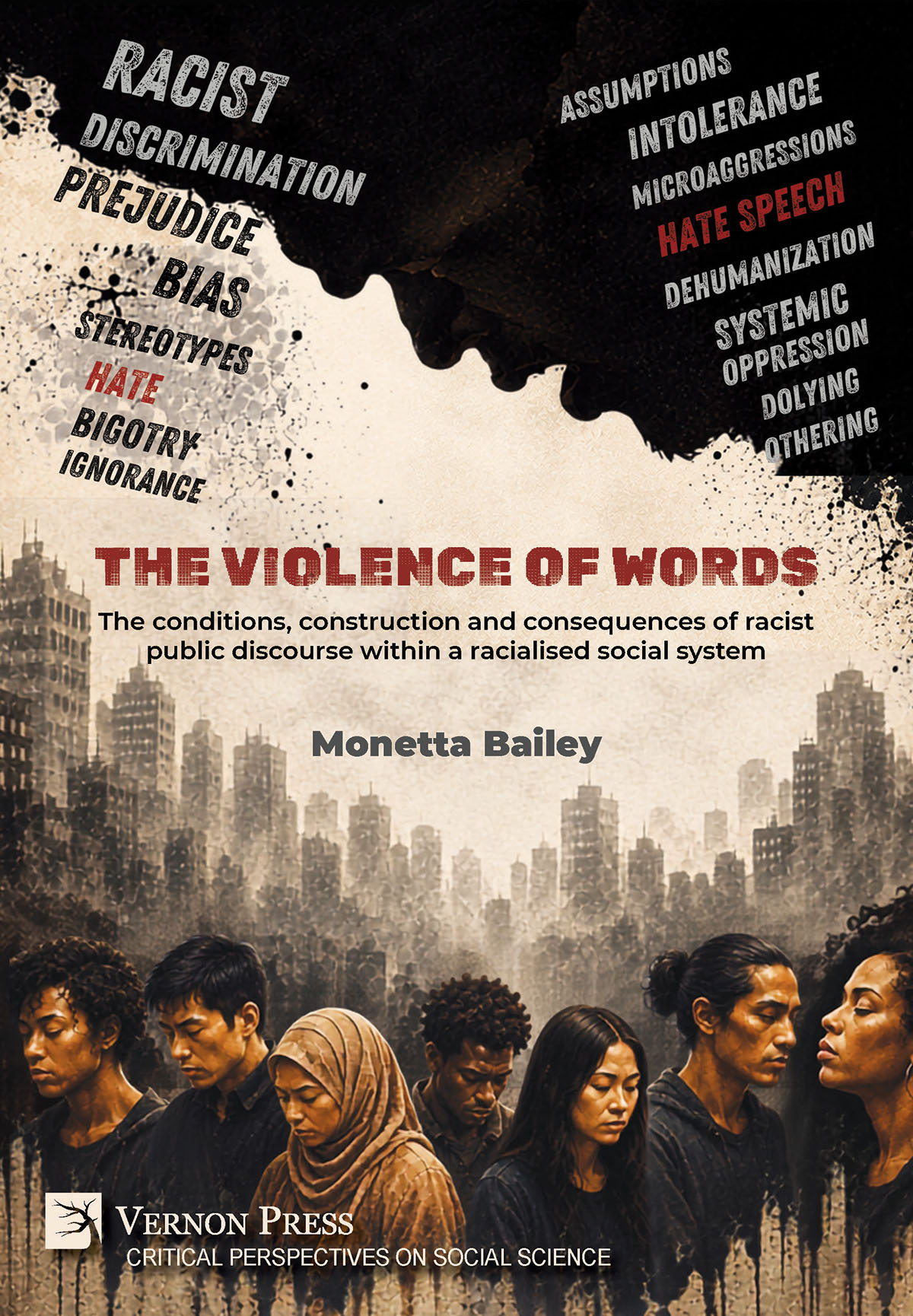
The conditions, construction and consequences of racist public discourse within a racialized social system
By: Monetta Bailey (Ambrose University)
This book investigates the potential of racist public discourse to harm racialized individuals. In tackling this, this book uses multiple theoretical frameworks and data sources to highlight the need to pay attention to how we regulate racist public discourse. The first theoretical framework, Critical Race Theory, provides the foundation to look at the ways in which racist ideologies are the bedrock of post-colonial society, which created the conditions for racist public discourse. The second framework, Sociology of Knowledge, serves as a methodological framework to demonstrate how racialized knowledge is gained and transmitted to allow for the construction of racist discourse. By combining these two frameworks to investigate the consequences of racist public discourse, this book presents theoretical and empirical evidence to suggest the need to rethink the definition of harm as it pertains to racist public discourse. This topic is important given the heightened public discourse around race in social and political arenas where, increasingly, individual rights to freedom of expression are seen as being more fundamental than the impact of language upon marginalized groups. My hope is to add to the growing body of work that sheds light on the impact of harmful public rhetoric, to bring awareness of the harm caused, and highlight the need to regulate hateful racist speech.
Bridging Innovation and Human Dignity in Remote and Hybrid Workspaces
Edited by: Leigh Maxwell (Edgewood University)
In a world permanently changed by the COVID-19 pandemic, 'Reimagining Work' offers a timely and urgent exploration of how work is being reshaped—and how it should be. This interdisciplinary volume brings together scholars and practitioners from communication, leadership, education, psychology, and organizational development to confront the challenges and possibilities of the evolving workplace. More than a reflection on remote and hybrid trends, this book is a call to rethink foundational questions: How do we honor human dignity in technologically mediated environments? What leadership strategies are needed to navigate generational dynamics, digital fatigue, and rapid innovation? How do communication technologies both enable and constrain productivity, connection, and inclusion? With historical depth and forward-looking insight, the contributors examine four central themes: (1) the theoretical and historical underpinnings of communication in digital workspaces; (2) the unique strengths and tensions of multigenerational teams; (3) the influence of communication technology on collaboration and performance; and (4) the ethical responsibilities of leaders in shaping a future of work that is both innovative and humane. At its core, 'Reimagining Work' centers the human experience. It argues that while AI and digital platforms are vital, they must serve—not replace—empathy, agency, and community. Leaders and organizations must design systems that are not only efficient and adaptable but also inclusive, equitable, and responsive to diverse needs. Whether you are an academic, a manager, a student, or a policymaker, this volume equips you with insights and frameworks to actively shape a future of work where technological advancement and human flourishing go hand in hand.
Navigating Identity, Loyalty, and Resistance in Puerto Rico
By: Denise Zubizarreta
'Colonial Stockholm Syndrome: Navigating Identity, Loyalty, and Resistance in Puerto Rico” by Denise Zubizarreta offers a critical examination of Puerto Rico’s enduring colonial legacy under both Spanish and American rule. This book explores the profound psychological and sociopolitical effects of centuries of colonization on Puerto Rican identity, illuminating how the island’s people have been conditioned to navigate complex loyalties and resistances in the face of systemic oppression. Through the innovative framework of Colonial Stockholm Syndrome, Zubizarreta analyzes how Puerto Ricans have historically reconciled their dual loyalties—first to the Spanish Empire and later to the United States—while confronting the ongoing challenges of inequality and dependency. The narrative delves into pivotal moments in Puerto Rican history, from the Spanish colonial era and the struggle for autonomy, to the American occupation beginning in 1898, and the current debates surrounding statehood and independence. Positioned within the broader discourse on colonialism and postcolonial studies, this work stands out for its unique approach to understanding Puerto Rico’s complex colonial history. By integrating historical analysis, personal narratives, and critical theory, Zubizarreta provides a comprehensive and accessible exploration of how colonial power dynamics continue to shape Puerto Rico’s national identity and political future. This book is an invaluable resource for scholars, students, and professionals in Latin American and Caribbean studies, political science, history, and cultural studies. It serves as a key reference for understanding the psychological and cultural dimensions of colonization, making it suitable for classroom adoption, academic research, and broader discussions on decolonization, identity, and resistance. 'Colonial Stockholm Syndrome: Navigating Identity, Loyalty, and Resistance in Puerto Rico' is an essential contribution to the literature on colonialism and its enduring impacts, offering new insights into one of the oldest colonies in the modern world.
Edited by: Murali Sivaramakrishnan (Pondicherry University, India) and Animesh Roy (St. Xavier’s College, Simdega, Jharkhand, India)
The book 'An Earth of One’s Own: Eco-cognizance and Environmental Justice' would take the reader into an ecocritical odyssey, a transformative journey through the myriad challenges plaguing the earth today, along with the desire for a fundamental shift in ways humans associate their relationship with multiple species of the earth. It proposes the idea of eco-cognizance of complex relationships among various species within the ecosystem and broaches the idea of interspecies justice, not merely as an ethical or legal framework, but as a holistic and organic paradigm taking into consideration ecological integrity, social integrity, and intergenerational responsibility. Eco-cognizance entails recognizing the profound impact of our actions on the environment and acknowledging our responsibility to preserve and protect it for future generations. This concept goes hand in hand with environmental justice, which seeks to address the disproportionate burden of environmental degradation and harm experienced by marginalized communities. It emphasizes the need for equitable access to clean air, water, and a healthy environment for all people, irrespective of their race, socioeconomic status, or geographical location. By embracing eco-cognizance and striving for environmental justice, we foster a sense of interconnectedness and harmony with the Earth. It prompts us to reevaluate our lifestyles, consumption patterns, and systems of production, in order to create a more sustainable and just world. It inspires us to engage in collective action, amplifying the voices of the unheard, and working towards a future where both human beings and the environment can thrive harmoniously. Taken together, this volume would urge the readers to inquire, introspect, and invite them to confront those perceptions, assumptions and biases that were complicit in perpetuating the ecological crisis. Through a synthesis of scientific reasoning, philosophical insights, and real-world case studies, this volume looks forward to exploring questions about human existence in a multispecies world and the impact of their choices on the planet they call home.
Edited by: Montserrat Gas-Aixendri (Universitat Internacional de Catalunya, Barcelona, Spain) and Adelaide Madera (University of Messina, Italy)
Looking at COVID-19 infection through a gendered lens reveals its deep impact on individuals in vulnerable positions, especially women. It raised new concerns about gender equity and inclusion, particularly when gender intersects with other identity markers such as religious affiliation. This intersection creates a “double vulnerability,” heightening the risk of discrimination, violence, hate speech, and harassment against women. In various legal contexts, women bear multiple roles and responsibilities. The interaction between gender, law, religion, and the pandemic has often resulted in disempowerment in shaping female identity. This is evident both in Western countries—where migrant women struggle for full integration—and in their countries of origin, where they often face the consequences of normative pluralism and insufficient state legal responses. The pandemic has generated not only a health crisis but also exacerbated social and economic issues, including increased gender-based violence in family settings and growing inequalities in access to fundamental rights such as healthcare, education, employment, and justice. In this complex framework, religious leaders face new challenges and must provide effective responses. Female leadership within religious contexts can play a crucial role in advocating for new paradigms that address evolving social, cultural, and legal needs. Religious actors are thus called upon to offer both guidance and support to vulnerable and marginalized members of their communities and to collaborate with governments in shaping a future where religious freedom, gender equality, gender justice, and freedom from discrimination are upheld. This volume aims to investigate the pandemic’s impact on women within faith communities, examine emerging balances between female religious/cultural claims and public welfare imperatives, and develop gendered, intersectional perspectives that promote women’s full integration, equality, and participation in civil society.
By: Paolo Diana (University of Salerno, Italy)
'The Digital Shift and the Social Research: Methods and Practices' offers a comprehensive exploration of how the digital era, particularly in the wake of the COVID-19 pandemic, has transformed the field of social research. Drawing on both theoretical discussions and empirical studies, the book provides an in-depth analysis of the impact of digital tools on research methods, behaviour, and interactions, while addressing the ethical challenges that arise in online contexts. The first part of the book examines the expansion of traditional research methods through digital platforms, with a focus on how these innovations shape social norms and practices. The second part shifts attention to education, presenting strategies to improve student engagement and foster collaborative learning in the virtual classroom. The third part highlights groundbreaking case studies from the University of Salerno, illustrating innovative pedagogical approaches in teaching social research methodology. By integrating insights from across the fields of digital research, pedagogy, and ethics, this work challenges researchers and educators alike to rethink conventional approaches and adapt to the rapidly changing digital environment. Ideal for students, educators, and professionals, it serves as both a reference and a practical guide for navigating the evolving landscape of social research. Original and timely, this book will appeal to academics, practitioners, and researchers in social sciences, providing not only theoretical perspectives but also hands-on solutions for digital research and learning environments.
Edited by: Laura Blount Carper (Texas A&M University-Texarkana)
'Innovative Approaches to Narratives in Health Communication' provides in-depth research studies, literature reviews, and step-by-step instructions for a variety of health communication contexts to help improve overall satisfaction and the empowerment of others. 'Innovative Approaches to Narratives in Health Communication' is intended to be used in many health-related contexts including, but not limited to, the classroom, further research, and health care professionals. While some texts focus on narratives in public communication or on a specific population (such as women’s health), this volume applies narratives in a variety of health communication contexts. 'Innovative Approaches to Narratives in Health Communication' opens with a chapter about the different types of narrative research, entertainment education, and narrative persuasion. Next, the first section includes chapters on the “human experience” and narratives. These chapters include powerful and emotional topics relating to the use of narratives in critical care, reproductive loss, video gaming and cancer narratives, and the impacts of the infant formula shortages. The second section highlights how narratives can be used in university/college-aged participants. The two chapters analyze how narratives can be applied to both the mental health of college students and those partaking in risky behaviors. The third and final section comprises chapters discussing the impacts of the COVID-19 pandemic and the use of narratives. The section begins with a chapter highlighting the “Coming age” during the pandemic and relevant research relating to narratives. The following chapters will include a discussion of the impacts of COVID-19 on black communities, and the importance of narratives with frontline workers. All of these chapters provide unique applications and examples that use narratives in current and important research. Overall, 'Innovative Approaches to Narratives in Health Communication' aims to provide a diverse audience with unique tools and perspectives to broaden our understanding and applicability of narratives in health communication contexts.