Loading...
Please wait while we load the content...

Loading...
Please wait while we load the content...
Loading...
Please wait while we load the content...
Explore peer - reviewed titles across the humanities and social sciences - rigorous research, fresh perspectives, and scholarship that inspires dialogue across disciplines.
Stay informed about our latest publications, calls for proposals, author news, events, and special announcements.
Join our community of scholars, librarians, authors, and readers and receive the latest updates from Vernon Press directly in your inbox.

From special discounts and global distribution partners to downloadable catalogs, flyers, and high-resolution covers, we make it easy to enrich your library’s collection. Access bibliographic data, explore subject-specific listings, and stay updated on forthcoming titles.
Become part of our librarian network and access dedicated tools, discounts, and resources to support collection development and promote new titles to your patrons.

Partner with Vernon Press to provide your customers with high-quality, peer-reviewed scholarship. We offer flexible ordering options, reseller agreements, and promotional materials to support your sales and outreach.

Vernon Press provides dedicated resources to help instructors adopt our books for courses and to support students with affordable access to high-quality scholarship. From desk and examination copies to tailored student editions, we aim to make our titles accessible in the classroom.
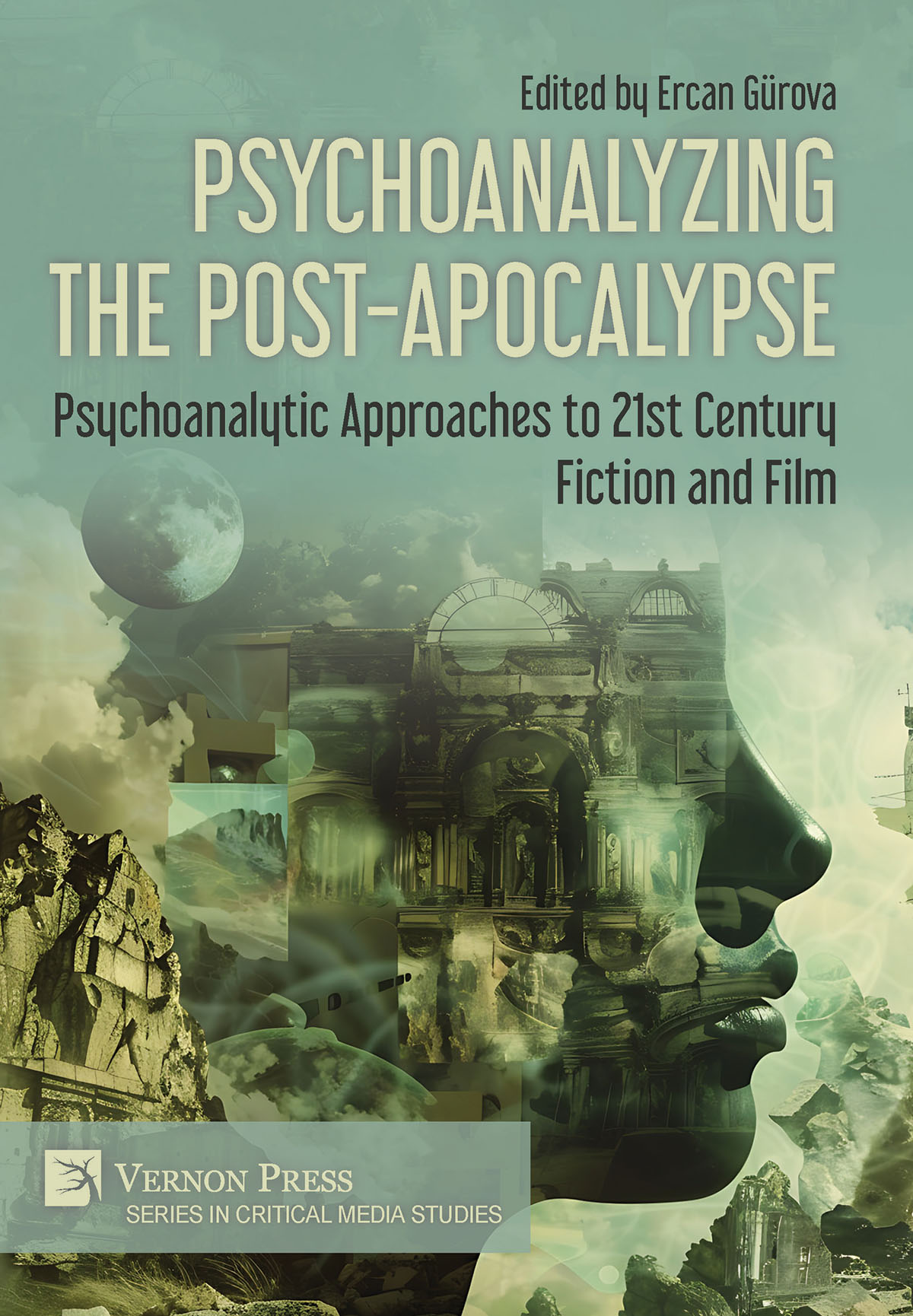
Psychoanalytic Approaches to 21st Century Fiction and Film
Edited by: Ercan Gürova (Ankara University, Turkey)
‘Psychoanalyzing the Post-Apocalypse: Psychoanalytic Approaches to 21st Century Fiction and Film’ offers an interdisciplinary exploration of contemporary post-apocalyptic literature and cinema through psychoanalytic theory. Bringing together studies of major novels, films, and television series, the volume demonstrates how Freudian, Lacanian, Jungian, and post-Lacanian perspectives illuminate recurring themes such as trauma, desire, mourning, identity, repression, survival, and psychic renewal in worlds shaped by catastrophe. The collection distinguishes itself by applying diverse psychoanalytic frameworks to a broad range of twenty-first-century texts, including "Oryx and Crake," "The Stone Gods," "Station Eleven," "War of the Worlds," "Vesper," "The Road," "The Leftovers," and "2012". Rather than offering generalized discussions of apocalypse, each chapter provides a theoretically grounded analysis of a specific work, revealing how narratives of collapse reflect contemporary anxieties while also imagining new forms of subjectivity, ethical relations, and resilience. Positioned at the intersection of psychoanalytic criticism, literary studies, film studies, and cultural theory, the volume advances current scholarship by foregrounding the psychological dimensions of post-apocalyptic storytelling and demonstrating the versatility of psychoanalytic approaches in interpreting ecological, technological, and existential crises. It contributes an original perspective to the growing body of research on post-apocalyptic fiction by integrating multiple psychoanalytic traditions across diverse media and cultural contexts. The book will serve as a valuable resource for researchers, graduate students, and advanced undergraduates in literature, film, media, psychoanalysis, and cultural studies. It is equally suitable for classroom adoption in courses on contemporary fiction, speculative literature, adaptation, and critical theory, while offering scholars a methodological framework for future interdisciplinary research on apocalypse and the human psyche.
By: Erwin James Casareno
'A Materialist Social Theory of the Idea' advances a unified theoretical framework for understanding how ideas emerge, circulate, and materialize in the world. Rejecting both classical Idealism and reductive Materialism, the book develops a neuromaterialist approach that defines ideas as physically instantiated patterns of neural activity and traces their effects across social, institutional, and material domains. Beginning from the premise that thought is a biological process, the book follows the idea from its origin in the brain through its transmission via language and behavior, its reproduction within culture, and its eventual crystallization in norms, institutions, and physical structures. This recursive process—linking brain, behavior, environment, and social organization—provides a comprehensive model of how ideas function as causal forces in history. Drawing on insights from sociology, philosophy, neuroscience, and political theory, the work introduces original conceptual tools, including models of ideational transmission, activation, and threshold dynamics, as well as the concept of cognitive terraforming to describe the large-scale transformation of reality through ideation. This book offers an interdisciplinary framework for analyzing ideology, social change, and institutional development, making it relevant to scholars and students in social theory, sociology, philosophy of mind, and related fields. It also provides a foundation for further research into the material basis of thought and its role in shaping human behavior and social structure.
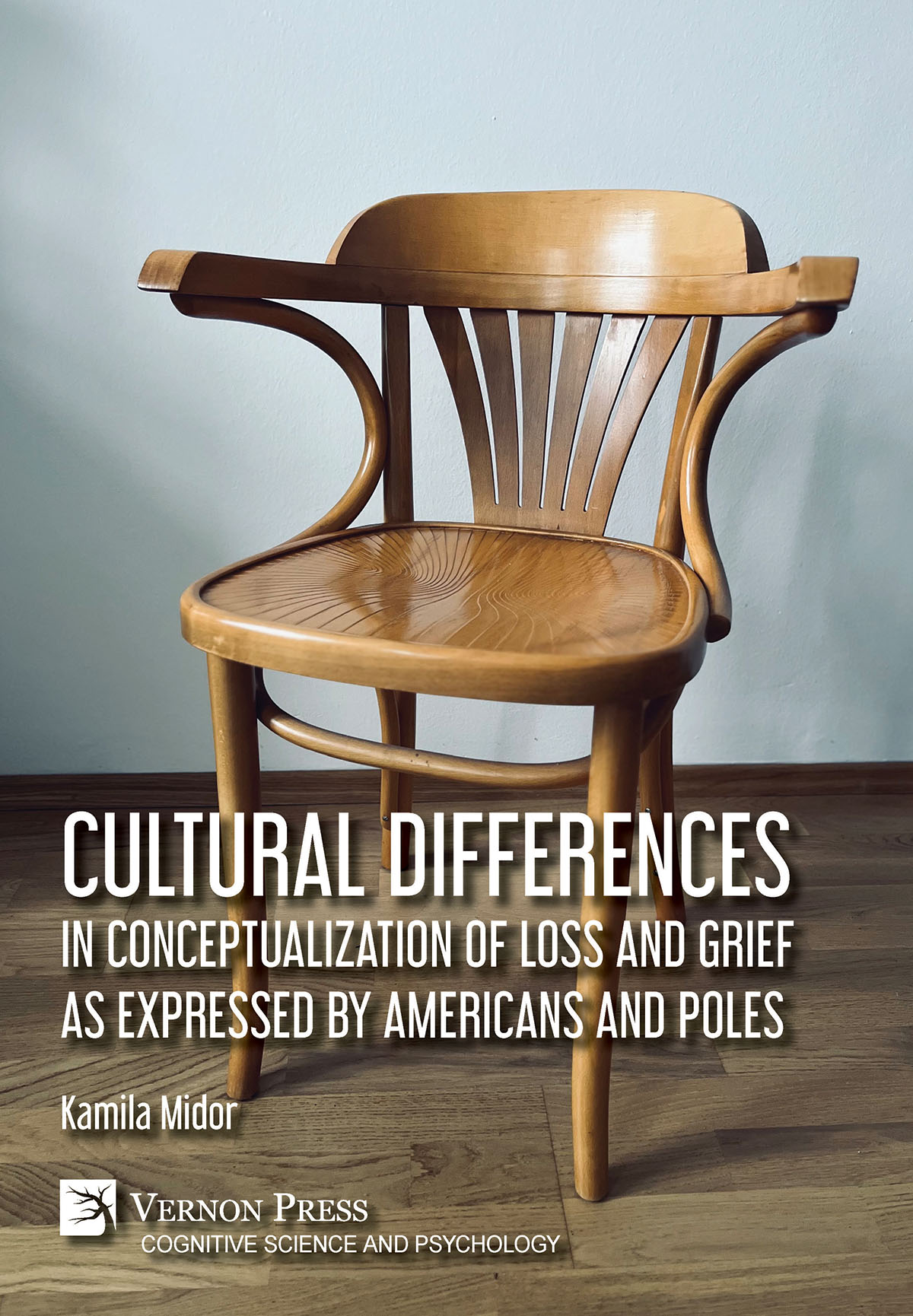
By: Kamila Midor
How do people put into words the experience of losing someone they love? This book offers a systematic, cross-cultural linguistic analysis of how loss and grief are conceptualized in American and Polish contexts, revealing both shared human patterns and culturally specific ways of expressing and processing bereavement. Drawing on qualitative data from nearly eighty participants who had lost a loved one up to five years before participating in the study, the study examines the metaphors and conceptual blends through which individuals articulate their experiences of grief. Using the frameworks of conceptual metaphor theory and conceptual integration theory, the book identifies recurrent conceptual structures—such as absence, emptiness, pain, inanimate physical object, and journey—that speakers draw on to make sense of profound emotional disruption. While many of these schemas appear across both cultural groups, the analysis reveals important differences in their subtypes, linguistic realizations, and cultural meanings. Notably, some patterns challenge the dominant view of grief as exclusively negative, including personifications such as grief as a guest in American narratives and grief as a teacher in the Polish data. The book fills a significant interdisciplinary gap between linguistic research on metaphor and psychological scholarship on grief. It is the first work to develop empirically grounded conceptual models of loss and grief for American and Polish speakers based on qualitative linguistic data, offering a novel, culturally sensitive perspective on bereavement. Accessible yet theoretically rigorous, the book will be valuable as a research reference, a methodological model for qualitative metaphor analysis, and a resource for classroom use. It will appeal to scholars and students in cognitive linguistics, cultural studies, psycholinguistics, and cross-cultural communication, as well as to psychologists, therapists, counselors, social workers, and others working professionally with grief and loss.
Global Perspectives
Edited by: Chandrabali Dutta (Hiralal Mazumdar Memorial College For Women, Kolkata, India) and Lefranc Joseph (The State University of Haiti, Haiti)
This work offers a comprehensive exploration of how childhood and youth are understood within contemporary social theory, emphasizing the major intellectual shifts that have transformed these fields over the past three decades. Moving beyond traditional developmental perspectives that portrayed children as passive recipients of socialization and youth as a brief transition to adulthood, the text draws on the “new social studies of childhood” and critical youth studies to argue that both childhood and youth are socially constructed categories. Rather than universal or biologically fixed stages, they are shaped by historical contexts, institutional arrangements, and unequal power relations. Central to the analysis is the concept of cultural politics, which highlights how meanings, identities, and representations of children and young people are produced, circulated, and contested. The work demonstrates how media narratives, state policies, educational systems, and global market forces frame childhood and youth in contradictory ways—at times idealizing them as innocent and hopeful, and at other times depicting them as deviant, risky, or problematic. Such representations are shown to reflect broader ideologies of nationhood, gender, modernity, and economic productivity. The text further underscores the importance of intersectionality, explaining how class, caste, race, gender, sexuality, disability, language, and nationality intersect to shape diverse and unequal experiences of growing up. It also examines the impact of globalization, neoliberal economic restructuring, migration, and digital technologies in reshaping young lives, generating both new opportunities and new vulnerabilities. Importantly, the work foregrounds agency, emphasizing that children and youth actively negotiate, reinterpret, and sometimes resist structural constraints in everyday contexts. By integrating insights from sociology, education, psychology, and cultural studies, the volume advances an interdisciplinary, decolonial, and context-sensitive framework for understanding the complex realities of childhood and youth in contemporary societies.
Critical Responses to Challenges and Change
Edited by: Sara Kauko (Lund University, Sweden), Patric C. Nordbeck (Lund University, Sweden), and Azher H. Qamar (University of Münster, Germany)
'Social Resilience: Critical Responses to Change and Challenges' is an edited volume intended for researchers and post-graduate students interested in studying social resilience from a multi-disciplinary, social scientific perspective. The volume consists of eight chapters that explore the concept from diverse disciplinary angles employing different theoretical and methodological approaches. Representing the fields of psychology, anthropology, social work, sociology of law, and legal studies, the authors discuss how social resilience manifests in different circumstances and contexts and what it means both in theory and practice. Thematically, these discussions concern migration, sexual minority experiences, environmental and economic crises, and the relationality and processuality of the concept as both an analytical tool and a unit of analysis in and of itself. Most research on social resilience follows the socio-ecological systems paradigm that defines (social) resilience as an ‘adaptive capacity’ to cope with and overcome adversities. While some chapters in this book adhere to this, others advocate for a more process-oriented and dynamic approach, focusing not so much on how people build resilience but rather how people act across time and space and in relation to others when facing disruptions to normalcy or outstanding crises. Here, the volume offers a tacit critique of the neoliberal model of conceptualizing resilience as a normative concept; an ideal way to be, and explains what research on resilience might look like if it instead centers on our continuous being.
A Linguist's Perspective on Its Nature, Origins and Use
By: Evelina Leivada (Autonomous University of Barcelona, Spain), Vittoria Dentella (University of Pavia, Italy), Elliot Murphy (University of Texas), David J. Lobina (Rovira i Virgili University, Spain), Dan Milway (University of Toronto), Miguel López-Otal (University of Zaragoza, Spain), Lucía Pitarch (University of Zaragoza, Spain), Stela Manova (Manova AI), Héctor Javier Vázquez Martínez (University of Pennsylvania), Annika Heuser, Charles Yang (University of Pennsylvania), Jordan Kodner (Stony Brook University), and Vincent J. Carchidi
The central question that this volume seeks to answer is: What are the similarities and differences between how human beings know language and how artificial intelligence knows language? The recent development and popularization of artificial intelligence systems called Large Language Models (such as ChatGPT) have led to a proliferation of opinions regarding the relevance of these systems beyond the practical purposes for which they were designed. It is not uncommon to find statements in social networks and popular magazines, as well as in academic publications, to the effect that these language models have solved the problems that sciences such as linguistics aim to solve, that their success in generating text can be seen as a refutation of some particularly influential theories of language, or that Language Models are actually scientific theories of language. These statements seem to be based on the premise that the linguistic knowledge acquired by these systems is comparable to that developed by humans. This book aims to evaluate whether this assumption is warranted. To this end, the opinions of renowned linguists and other cognitive scientists have been gathered to answer questions such as what kind of language knowledge these artificial systems have, to what extent they are faithful models of natural language knowledge, and what we can learn about the human language faculty by examining their inner workings. Anyone interested in the nature of human language and mind and in artificial intelligence can follow the eight chapters of the book without being an expert in linguistics or computer science. This is the first comprehensive work to present the views of experts in linguistic theory on the relevant questions mentioned above, and to provide an accessible presentation of current research on the nature of artificial knowledge of language.
Modular Studies in Cognitive Philosophy
Edited by: Tirtha Prasad Mukhopadhyay (Universidad de Guanajuato, Mexico), Shoji Nagataki (Chukyo University, Japan), and John R. Baker (Shinawatra University, Thailand)
'Emotion, Communication, Interaction: Modular Studies in Cognitive Philosophy' consists of reflective and analytical essays on the nature and function of human emotions and communicative strategies based on the most recent advances in Cognitive Science. Broadly based on the cognitive architecture of emotions, this volume of essays suggests fresh methods of evaluating emotional behavior. As such, they create theoretical and, in some cases, qualitatively valid pathways for understanding what emotions mean and represent in the scale of human evolution and how emotional communication can potentially benefit human life and well-being. The authors suggest how aesthetic emotions constitute a significantly new area of research on fine-tuned and less understood expressions. Fresh insights into the intersubjective nature of emotional communication, and strategic interactions among humans and between humans and machines, redefine the limits of human interactivity and the extent to which emotions are underwritten in the Anthropocene. Furthermore, such an important faculty as that of emotion, when studied in contexts of competitive sports philosophy, prosocial behaviour, altruism or collective nostalgia, opens up different possibilities for the achievement of mental health and well-being. This book will stand as an excellent reference for research on the efficacy of emotional life and its impact on the grand objectives of acquiring freedom and happiness. Though epistemological variations mark the methods of discourse, the essays in this volume tout emotional cognition and communications as viable tools of research for a post-Enlightenment academy.
Understanding Academic Experiences in US Higher Education
By: Kruti S. Chaliawala (Boise State University)
Navigating the intricate landscape of U.S. higher education can be profoundly challenging for international students. This groundbreaking work offers a vital, dual perspective, interweaving deeply personal lived experiences with rigorous academic research to illuminate the multifaceted journey of cultural and academic adaptation. Beyond the author’s compelling narrative in the preface, the book shares personal stories, making complex challenges tangible and relatable. From dissecting the nuances of U.S. grading systems and academic culture to exploring complex social integration, language proficiency hurdles, and the pervasive challenges of “othering” and discrimination, this book provides an honest and comprehensive account. A unique focus is placed on the distinct barriers faced by female students from conservative cultural backgrounds, offering empathetic insight into their unique struggles with participation, social norms, and mental well-being. Distinguished by its blend of personal narrative and evidence-based solutions, this book transcends mere description. It critically examines the role of institutional support, advocating for culturally sensitive mentorship, inclusive classroom practices, tailored mental health services, and essential cultural competency training for faculty and staff. 'Cultural Influences and International Students' is an indispensable resource for current and prospective international students seeking to understand and prepare for their journey. It is also an essential guide for higher education professionals, including faculty, advisors, administrators, and policymakers, providing actionable strategies to foster truly inclusive environments. This work stands as a powerful call to action for transforming U.S. campuses into spaces where every international student can thrive academically and personally.
Political, Economic and Legal Empowerment: Initiatives from Different Countries
Edited by: Anita Brandon (UNFPA, India)
This volume on Women Empowerment is a showcase for readers interested in case studies on Women Empowerment in the Political, Economic, and Legal Contexts from different countries across the world. The case studies here are presented under four sub-themes.