Loading...
Please wait while we load the content...

Loading...
Please wait while we load the content...
Loading...
Please wait while we load the content...
Explore peer - reviewed titles across the humanities and social sciences - rigorous research, fresh perspectives, and scholarship that inspires dialogue across disciplines.
Stay informed about our latest publications, calls for proposals, author news, events, and special announcements.
Join our community of scholars, librarians, authors, and readers and receive the latest updates from Vernon Press directly in your inbox.

From special discounts and global distribution partners to downloadable catalogs, flyers, and high-resolution covers, we make it easy to enrich your library’s collection. Access bibliographic data, explore subject-specific listings, and stay updated on forthcoming titles.
Become part of our librarian network and access dedicated tools, discounts, and resources to support collection development and promote new titles to your patrons.

Partner with Vernon Press to provide your customers with high-quality, peer-reviewed scholarship. We offer flexible ordering options, reseller agreements, and promotional materials to support your sales and outreach.

Vernon Press provides dedicated resources to help instructors adopt our books for courses and to support students with affordable access to high-quality scholarship. From desk and examination copies to tailored student editions, we aim to make our titles accessible in the classroom.
Falsehood and the Age of Hypocrisy
By: Abdullah Al Mamoon (Leeds Business School, Leeds Beckett University)
No description available
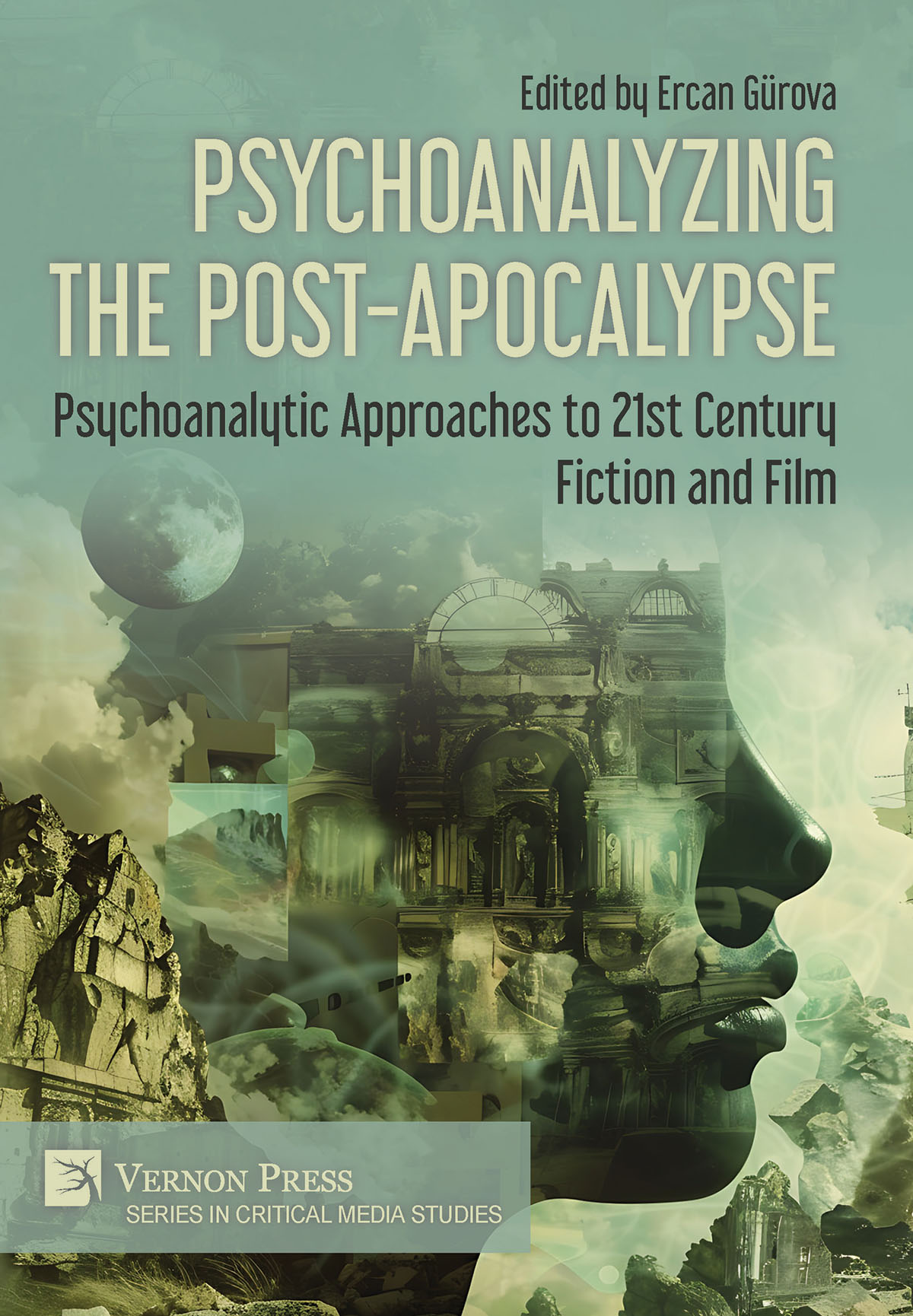
Psychoanalytic Approaches to 21st Century Fiction and Film
Edited by: Ercan Gürova (Ankara University, Turkey)
‘Psychoanalyzing the Post-Apocalypse: Psychoanalytic Approaches to 21st Century Fiction and Film’ offers an interdisciplinary exploration of contemporary post-apocalyptic literature and cinema through psychoanalytic theory. Bringing together studies of major novels, films, and television series, the volume demonstrates how Freudian, Lacanian, Jungian, and post-Lacanian perspectives illuminate recurring themes such as trauma, desire, mourning, identity, repression, survival, and psychic renewal in worlds shaped by catastrophe. The collection distinguishes itself by applying diverse psychoanalytic frameworks to a broad range of twenty-first-century texts, including "Oryx and Crake," "The Stone Gods," "Station Eleven," "War of the Worlds," "Vesper," "The Road," "The Leftovers," and "2012". Rather than offering generalized discussions of apocalypse, each chapter provides a theoretically grounded analysis of a specific work, revealing how narratives of collapse reflect contemporary anxieties while also imagining new forms of subjectivity, ethical relations, and resilience. Positioned at the intersection of psychoanalytic criticism, literary studies, film studies, and cultural theory, the volume advances current scholarship by foregrounding the psychological dimensions of post-apocalyptic storytelling and demonstrating the versatility of psychoanalytic approaches in interpreting ecological, technological, and existential crises. It contributes an original perspective to the growing body of research on post-apocalyptic fiction by integrating multiple psychoanalytic traditions across diverse media and cultural contexts. The book will serve as a valuable resource for researchers, graduate students, and advanced undergraduates in literature, film, media, psychoanalysis, and cultural studies. It is equally suitable for classroom adoption in courses on contemporary fiction, speculative literature, adaptation, and critical theory, while offering scholars a methodological framework for future interdisciplinary research on apocalypse and the human psyche.
Perspectivas críticas desde América Latina
Edited by: Guillermo A. Luppi (Universidad de La Serena, Chile)
'Música antigua: Perspectivas críticas desde América Latina' offers what is, to our knowledge, the first sustained collective reassessment of early music from Latin American perspectives. Rather than treating early music as a stable repertory defined by European periodization or by the historically informed performance movement, the volume approaches it as a contested, dynamic field in which canons, archives, pedagogies, performance practices, and historiographical narratives are continually negotiated. Bringing together scholars from across Latin American and Ibero-American scholarly contexts, the book examines a wide range of subjects: the teaching of music history in the region; Andean archaeomusicology; historical consciousness and early music pedagogy; the impact of the Spanish Black Legend on music historiography; plainchant in Hispanic America; the religious villancico in colonial Hispanic America through big data analysis; villancicos de negro from Puebla; early music institutions in Brazil; and the politics of authenticity in Bolivian mission music archives. Across these case studies, the volume addresses broader questions concerning coloniality, canon formation, archival authority, Indigenous and Afro-descendant agency, cultural memory, and the circulation of musical knowledge. Framed by a prologue by Leonardo Waisman and an epilogue by Miriam Escudero, the volume includes seven chapters in Spanish and two in Portuguese, reflecting the multilingual character of Latin American and Ibero-American musicology. The book contributes to current debates in musicology, ethnomusicology, performance studies, Latin American studies, and cultural history by challenging inherited North Atlantic frameworks and proposing more regionally grounded ways of studying early music. It will be useful as a reference work for researchers, as a methodological aid for scholars working on music history and historiography, and as a teaching resource for undergraduate and graduate courses on early music, Latin American music, colonial music, music historiography, and decolonial approaches to the arts. While academically rigorous, the volume is also relevant to performers, educators, and ensemble directors seeking critical perspectives on early music beyond the traditional European canon.
History & Impact
Edited by: Ellen C. Schwartz (Eastern Michigan University)
This illustrated volume brings together a wide variety of perspectives on the historic installation, 'Womanhouse' (1972). The introduction discusses the background and creation of this first whole-house feminist installation, a class assignment for the Feminist Art Program in the newly established California Institute of the Arts under the direction of Judy Chicago and Miriam Schapiro. Two of the original artists offer remembrances and speak to the project’s impact on their long careers of artmaking. Artistic descendants of the exhibition are discussed: these include whole-house installations which respond to the original, expanding the conversation by including artists of differing races, ethnicities, and gender expressions, and several iterations which served various roles in their communities. Two shows in galleries commemorating 'Womanhouse' and its artistic offspring are also considered. Next, several contemporary artists present their work and discuss how it relates to 'Womanhouse' and the questions it raised. Finally, a contemporary re-imagining of 'Womanhouse' is offered, giving a contemporary take on the historic exhibition. While much has been written about the original exhibition, rarely have we heard from some of the original artists about how their participation affected their careers and artistic output. In addition, this volume offers information on some of the descendant exhibitions. Discussion of these and their impact in the communities housing them underscores the importance of 'Womanhouse' in the lives of women in the years since 1972. Consideration of shows in galleries highlights the difference between them and the house installations. Reactions of contemporary artists offer new insight into the longevity of the original. And a contemporary re-imagining of 'Womanhouse' surprises the reader with unusual additions and re-evaluations.
By: Erwin James Casareno
'A Materialist Social Theory of the Idea' advances a unified theoretical framework for understanding how ideas emerge, circulate, and materialize in the world. Rejecting both classical Idealism and reductive Materialism, the book develops a neuromaterialist approach that defines ideas as physically instantiated patterns of neural activity and traces their effects across social, institutional, and material domains. Beginning from the premise that thought is a biological process, the book follows the idea from its origin in the brain through its transmission via language and behavior, its reproduction within culture, and its eventual crystallization in norms, institutions, and physical structures. This recursive process—linking brain, behavior, environment, and social organization—provides a comprehensive model of how ideas function as causal forces in history. Drawing on insights from sociology, philosophy, neuroscience, and political theory, the work introduces original conceptual tools, including models of ideational transmission, activation, and threshold dynamics, as well as the concept of cognitive terraforming to describe the large-scale transformation of reality through ideation. This book offers an interdisciplinary framework for analyzing ideology, social change, and institutional development, making it relevant to scholars and students in social theory, sociology, philosophy of mind, and related fields. It also provides a foundation for further research into the material basis of thought and its role in shaping human behavior and social structure.
Edited by: Brian Gran (Case Western Reserve University)
'Human Rights and Social Concerns' brings together scholars who examine how human rights frameworks illuminate, and sometimes fail to address, pressing social concerns across diverse societies. Contributors explore issues including migrant women’s experiences of street harassment (Valeria Bonatti and Ashley C.F. Hutson), stigma and disability in rural India (Namita Gupta and Pardeep Kumari), environmental licensing and justice in Brazil (Cassia Cardoso de Miranda), constitutional over‑regulation of families (Ágne Lux and Emese Pásztor), and the paradoxical role of human rights in environmental degradation (Haimo Schulz Meinen).
Social Media and Youth Activism
By: Monica Pauls (Mount Royal University)
Young people’s lives are increasingly shaped by digital media, yet public and academic debates about youth, social media and well-being are often dominated by fear-based narratives that frame online spaces as inherently harmful. Against a backdrop of rising concerns about youth mental health and widespread anxieties about social media use, this book offers a critical and timely intervention into how we understand young people’s political and civic engagement in the digital age. Drawing on in-depth interviews with youth activists involved in the international climate change movement and the American gun control movement, alongside analysis of their social media practices, the book challenges binary distinctions between online and real-world activism. Rather than treating digital participation as superficial or ineffective, it foregrounds young people’s own perspectives on activism, demonstrating how digital platforms function as meaningful spaces for connection, organizing and political expression. Situated at the intersection of youth studies, sociology, media studies and political engagement, the book builds on and extends existing literature on digital activism by centring youth voices and lived experience. It offers a counter-narrative to the persistent “slacktivism” critique, arguing that such framings not only misunderstand contemporary activism but risk delegitimizing young people’s contributions to civic life. Written in an accessible style while grounded in rigorous social research, this book will be of interest to scholars, post-secondary students and practitioners working in education, youth work, child and youth care, social services and community organizing. It is suitable for classroom adoption, scholarly reference and professional reflection, and provides valuable insights for anyone seeking to better understand how young people are reshaping political participation in a digitally networked world.
The conditions, construction and consequences of racist public discourse within a racialized social system
By: Monetta Bailey (Ambrose University)
This book investigates the potential of racist public discourse to harm racialized individuals. In tackling this, this book uses multiple theoretical frameworks and data sources to highlight the need to pay attention to how we regulate racist public discourse. The first theoretical framework, Critical Race Theory, provides the foundation to look at the ways in which racist ideologies are the bedrock of post-colonial society, which created the conditions for racist public discourse. The second framework, Sociology of Knowledge, serves as a methodological framework to demonstrate how racialized knowledge is gained and transmitted to allow for the construction of racist discourse. By combining these two frameworks to investigate the consequences of racist public discourse, this book presents theoretical and empirical evidence to suggest the need to rethink the definition of harm as it pertains to racist public discourse. This topic is important given the heightened public discourse around race in social and political arenas where, increasingly, individual rights to freedom of expression are seen as being more fundamental than the impact of language upon marginalized groups. My hope is to add to the growing body of work that sheds light on the impact of harmful public rhetoric, to bring awareness of the harm caused, and highlight the need to regulate hateful racist speech.
Bridging Innovation and Human Dignity in Remote and Hybrid Workspaces
Edited by: Leigh Maxwell (Edgewood University)
In a world permanently changed by the COVID-19 pandemic, 'Reimagining Work' offers a timely and urgent exploration of how work is being reshaped—and how it should be. This interdisciplinary volume brings together scholars and practitioners from communication, leadership, education, psychology, and organizational development to confront the challenges and possibilities of the evolving workplace. More than a reflection on remote and hybrid trends, this book is a call to rethink foundational questions: How do we honor human dignity in technologically mediated environments? What leadership strategies are needed to navigate generational dynamics, digital fatigue, and rapid innovation? How do communication technologies both enable and constrain productivity, connection, and inclusion? With historical depth and forward-looking insight, the contributors examine four central themes: (1) the theoretical and historical underpinnings of communication in digital workspaces; (2) the unique strengths and tensions of multigenerational teams; (3) the influence of communication technology on collaboration and performance; and (4) the ethical responsibilities of leaders in shaping a future of work that is both innovative and humane. At its core, 'Reimagining Work' centers the human experience. It argues that while AI and digital platforms are vital, they must serve—not replace—empathy, agency, and community. Leaders and organizations must design systems that are not only efficient and adaptable but also inclusive, equitable, and responsive to diverse needs. Whether you are an academic, a manager, a student, or a policymaker, this volume equips you with insights and frameworks to actively shape a future of work where technological advancement and human flourishing go hand in hand.