Loading...
Please wait while we load the content...

Loading...
Please wait while we load the content...
Loading...
Please wait while we load the content...
Explore peer - reviewed titles across the humanities and social sciences - rigorous research, fresh perspectives, and scholarship that inspires dialogue across disciplines.
Stay informed about our latest publications, calls for proposals, author news, events, and special announcements.
Join our community of scholars, librarians, authors, and readers and receive the latest updates from Vernon Press directly in your inbox.

From special discounts and global distribution partners to downloadable catalogs, flyers, and high-resolution covers, we make it easy to enrich your library’s collection. Access bibliographic data, explore subject-specific listings, and stay updated on forthcoming titles.
Become part of our librarian network and access dedicated tools, discounts, and resources to support collection development and promote new titles to your patrons.

Partner with Vernon Press to provide your customers with high-quality, peer-reviewed scholarship. We offer flexible ordering options, reseller agreements, and promotional materials to support your sales and outreach.

Vernon Press provides dedicated resources to help instructors adopt our books for courses and to support students with affordable access to high-quality scholarship. From desk and examination copies to tailored student editions, we aim to make our titles accessible in the classroom.
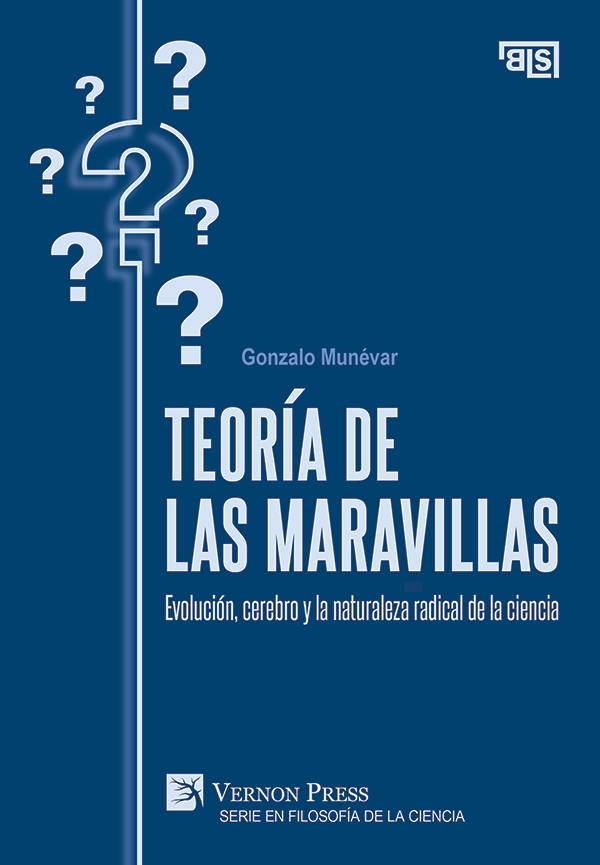
By: Gonzalo Munévar (Lawrence Technological University)
'Teoría de las Maravillas: Evolución, cerebro y la naturaleza radical de la ciencia' aspira a determinar la mejor manera en la que la ciencia puede satisfacer nuestros sentidos de maravillarnos a través de la exploración del mundo. El empirismo establece que la ciencia tiene éxito porque sigue el método científico: La observación basa su juicio en la Teoría, apoyándola o rechazándola. Se ha dado mucho crédito al inventor de este método, Galileo, pero cuando los filósofos historicistas de la ciencia, como Kuhn y Feyerabend, llaman nuestra atención sobre lo que Galileo investigó y escribió realmente, nos quedamos en shock al descubrir que lo que hizo fue clavar una daga en el corazón del Empirismo. Derogó la distinción entre teoría y observación. Hechos simples, como la caída en vertical de una piedra, descartaron el movimiento terrestre. Y con esto concluir que, si la piedra cae en vertical, sin embargo, tenemos que asumir que la tierra no se mueve. Si se moviera entonces la piedra solo daría la sensación de caer en vertical. Galileo, de esta manera, reemplazó los “hechos” sobre el movimiento de la tierra con “hechos” que incluían este movimiento. Este proceso es típico de las revoluciones científicas. Una buena estrategia para la ciencia es la elaboración de alternos radicales. De esta manera, y sobre su tesis, se reconsidera lo que cuenta como evidencia. A Feyerabend se le llamó irracional por esta sugerencia. Pero, si miramos la practica de la ciencia desde la perspectiva de la evolución y de la neurociencia, esta nos muestra que la sugerencia, de hecho, es bastante racional y que, además, ofrece una explicación sobre el por qué la ciencia funciona mejor como forma radical de conocimiento. También nos conduce a una forma biológica sensitiva de verdad relativa, con borradores preliminares que llevan a interesantes debates con otros investigadores de la filosofía de la ciencia. Este libro será de gran interés para estudiantes universitarios, profesores e investigadores en el ámbito de la historia o de la filosofía de la ciencia, así como a cualquiera con un interés general en la naturaleza de la ciencia.
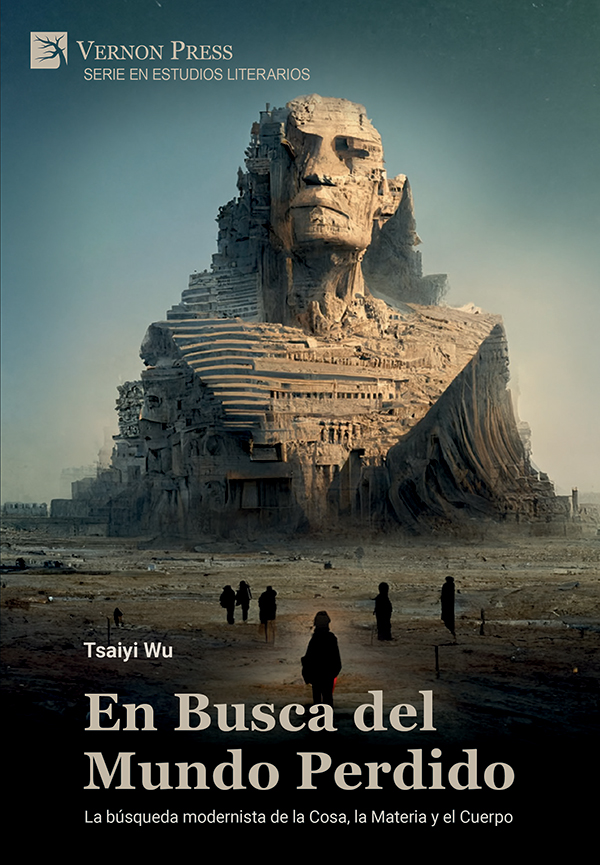
By: Tsaiyi Wu (Shanghai Normal University)
Este libro estudia, desde una perspectiva histórica, como los artistas modernistas, esa primera generación que empezó a reflexionar de manera intensa sobre el legado del Idealismo Alemán, buscó recrear el “yo” para recrear su relación con el mundo material. Teóricamente, el libro mantiene una conversación con los típicos intereses desantropocéntricos del siglo XXI y propone que el artista pueda escapar del antropocentrismo a través de la transformación del yo. La Parte Una, “Artificialidad” abre el debate con el culto del fin de siglo a la artificialidad, en el que los artistas como Theophile Gautier, Charles Baudelaire, J.K. Huysmans y Gustave Moreau se dedicaron a mostrar su amor por las esfinges pétreas, las estatuas de mármol o las apariencias inorgánicas. El culto a la artificialidad es una subversión perversa de la máxima de Hegel en la que la introspección es superior a la materia. En el culto a la artificialidad, el arte es superlativo a la naturaleza, incluso aunque el arte no se defina ya como imaginación inmaterial sino se reconfigure como una manifestación misteriosa que desafía al significado y subyuga al corazón sensible. La Parte Dos, “Ficción Autofilosófica” argumenta acerca del género en el que los artistas (Marcel, Proust, Walter Pater y Virginia Woolf) fijan las ideas filosóficas en el laboratorio de sus vidas y por lo tanto traducen a sus ideales estéticos —es decir, la manera en la que desean relacionarse con el mundo —en un viaje de auto examinación y autocultivo. En la novela de Pater, 'Mario el Epicúreo' el héroe explora como un percepto filosófico se puede traducir a sentimientos y acciones, demostrando que la literatura es un acercamiento único a la verdad ya que convierte la teoría en una experiencia transformadora. Mediante la exploración de los últimos descubrimientos de la psicología empirista, el artista busca escapar de la trampa Kantiana mediante el desarrollo de sus poderes de recepción y registrar pensamientos pasajeros y sensaciones. En resumen, el libro discute sobre como el desantropocentrismo no puede predicarse a través de una metafísica que presume que la subjetividad universal debe ser una forma de investigación estética que recrea al “yo” para recrear nuestras relaciones con el universo.
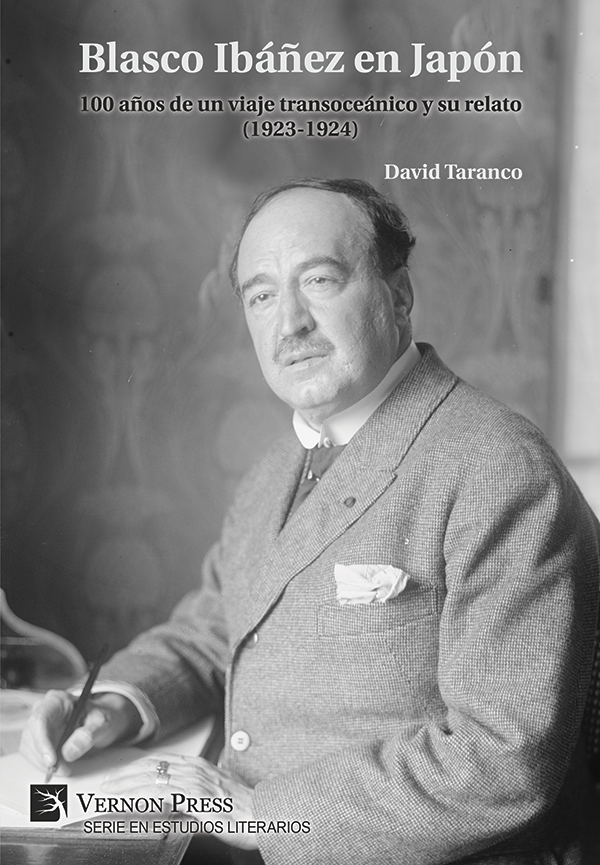
By: David Taranco (University Doshisha, Kioto, Japan)
En 1923, el escritor español Vicente Blasco Ibáñez, por entonces una de las principales figuras de la literatura mundial gracias el éxito de su novela 'Los cuatro jinetes del Apocalipsis', se embarcó en un crucero de lujo para circunnavegar el planeta. Fruto de dicha aventura es el fascinante relato de viajes 'La vuelta al mundo de un novelista', publicado en tres volúmenes entre 1924 y 1925. Dentro de dicho recuento, Japón ocupa un espacio preponderante, tanto en extensión como en implicación descriptiva y analítica por parte del autor. Un siglo después, este libro expone las claves del protagonismo de Japón en el relato de Blasco Ibáñez y ofrece una edición anotada de los capítulos que el escritor dedicó a su recorrido por tierras japonesas. El estudio previo del personaje y de la concepción del viaje, así como las glosas a pie de página de la edición anotada, permitirán al público lector comprender mejor el trasfondo de la travesía transoceánica, descifrar referencias culturales e históricas y disfrutar aún más la lectura del entretenido e instructivo cuaderno de bitácoras. Además, el personal investigador interesado en el desarrollo del hispanismo en Japón encontrará en este libro una visión novedosa del nacimiento y la evolución del estudio de la lengua y la literatura españolas y de las culturas hispánicas en el país del sol naciente y descubrirá la extraordinaria aportación de Blasco Ibáñez en este campo.
By: Marta Boris Tarre (University of Idaho)
"Cuerpos de género y cuerpos políticos" constituye uno de los pocos libros en lengua española sobre las conversiones al islam de los grupos en cuestión, pero más específicamente de como estos utilizan el género y la nación como vehículos identitarios, lo que será útil para investigadores en estudios religiosos y sociológicos. Este libro examina las convergencias que se producen entre conversión al islam y género, nación y ciudadanía por parte de dos grupos poblacionales occidentales –españoles y US latinos–. El estudio etnográfico de campo, los feminismos islámicos y el estudio de masculinidades van a constituir la base para explorar cómo la visión de género que estas mujeres y hombres conversos al islam sostienen representan nuevas formas identitarias de género que constituyen instrumentos políticos y que resisten los estereotipos que se atribuyen al sujeto musulmán. No obstante, estos también representan alternativas de género por incorporar un elemento religioso, lo cual les otorga agencia para vivir el islam en un territorio que vislumbra esta religión de forma hostil. Finalmente, "Cuerpos de género y cuerpos políticos" estudiará cómo los conversos redefinen la identidad de nación y de ciudadanía en función a su afiliación religiosa. El componente moral que su nueva religión aporta contribuye a una idea de nación y de ciudadanía que no puede entenderse sin visionar al ciudadano como un ser moral y religioso, lo que contrasta con la idea de ciudadanía occidental y con la identidad de nación del territorio donde residen en la que lo religioso es privatizada. Ello desemboca en un concepto de “españolidad” y de “latinidad” que incorpora el islam como base infalible de autoridad y que contrasta con una sociedad hegemónica que incorpora otros factores como la región, la cultura y la lengua como base a idea de nación y de cohesión nacional.
An East/West dialogue / Un dialogue Orient/Occident
Edited by: Christine Vial Kayser (Héritages UMR9022 (CNRS, CY, Ministère de la culture), France)
This book analyses the dynamic relationship between art and subjective consciousness, following a phenomenological, pragmatist and enactive approach. It brings out a new approach to the role of the body in art, not as a speculative object or symbolic material but as the living source of the imaginary. It contains theoretical contributions and case studies taken from various artistic practices (visual art, theatre, literature and music), Western and Eastern, the latter concerning China, India and Japan. These contributions allow us to nourish the debate on embodied cognition and aesthetics, using theory–philosophy, art history, neuroscience–and the authors’ personal experience as artists or spectators. According to the Husserlian method of “reduction” and pragmatist introspection, they postulate that listening to bodily sensations–cramps, heartbeats, impulsive movements, eye orientation–can unravel the thread of subconscious experience, both active and affective, that emerge in the encounter between a subject and an artwork, an encounter which, following John Dewey, we deem to be a case study for life in general. Ce livre analyse la relation dynamique entre l’art et la conscience subjective, selon une approche phénoménologique, pragmatiste et enactive. Il vise à faire émerger une nouvelle approche du rôle du corps dans l’art, non pas comme objet spéculatif ou matériau symbolique, mais comme source vivante de l’imaginaire. Les contributions théoriques et les études de cas sont prises à diverses pratiques artistiques (arts visuels, théâtre, littérature et musique), occidentales et orientales, ces dernières concernant la Chine, l’Inde et le Japon. Selon la méthode husserlienne de « réduction », en écho à l’introspection pragmatiste, les textes témoignent que l’écoute des sensations corporelles – crampes, battements de cœur, mouvements pulsionnels, orientation des yeux – mises en jeu par l’œuvre, permet de dénouer le fil de l’expérience inconsciente, à la fois kinesthésique et affective, qui émerge dans la rencontre entre un sujet et une œuvre d’art, une rencontre comprise, à la manière de Dewey, comme un cas d’école de la vie en général.
By: Johanna M. Lems (Universidad Complutense de Madrid, Spain)
'Tomar la palabra' es un análisis basado en la búsqueda de justicia social por medio de la participación sociopolítica, que aborda con cuidado muchos de los temas que determinan y contribuyen a reproducir las situaciones de subalternidad y subordinación a las que se ven sometidas las personas musulmanas en España. Desde un posicionamiento novedoso sobre el islam en el contexto español, al abordar su estudio desde la existencia de musulmanidades diversas, contribuye al avance de los estudios sobre la realidad social y política de las poblaciones musulmanas en nuestro país. El principal objetivo de la autora ha sido identificar los procesos mediante los que las personas musulmanas – o aquellas leídas como tales– tratan de ganar voz y reclamar los derechos que les son negados sistemáticamente. Todo ello con el fin de contribuir a una comprensión más crítica y menos estigmatizadora sobre el islam y las personas musulmanas que viven en España. Se trata de un trabajo interdisciplinario que parte de una investigación etnográfica llevada a cabo entre 2017 y 2020 en distintas partes del territorio estatal. Puede resultar de gran interés como monografía para profesores y estudiantes de cursos de grado y posgrado en disciplinas como sociología, antropología, ciencias políticas, ciencias de las religiones. Igualmente, será de utilidad como obra de consulta en estudios de subalternidad, feministas y de migraciones o para trabajadores sociales, líderes y comunidades religiosas, instituciones gubernamentales y aquellas personas u organizaciones centradas en los derechos humanos, el diálogo interreligioso o las que, en general, quieren estar informadas sobre el escenario político contemporáneo español.
With an edition of Madrid MS 2908
By: Janis C. Bell, Elisa Ruiz Garcia (University of Madrid, Spain), Silvio Leydi, and Stefano Bruzzese
Soon after celebrating the appointment of Federico Borromeo to Archbishop, the city of Milan began planning elaborate festivities to celebrate the betrothal of Prince Philip, future King of Spain, to the niece of the Holy Roman Emperor, Gregoria Maximiliana. She was scheduled to travel through Milan in 1597 on her journey to Spain. Guido Mazenta, a private citizen, planned for the erection of five triumphal arches in strategic locations throughout the city. This volume includes studies of the author and his previously unrecognized importance in turn-of-the-century Milan, presents an analysis and transcription of his illustrated manuscript for the program (Biblioteca Nacional Ms. 2908), and fully examines the scope and expenses of the festivities in honor of royal visitors in the second half of the sixteenth century. Although Gregoria died before the planned celebration, many of its features were transferred to the entry in 1598 of her sister, Margherita, who married Philip soon after he ascended to the throne as Philip III of Spain. This celebration left a permanent mark on the city of Milan through the construction of the Porta Romana. Scholars of early modern European art and history will find a richness of new archival documentation, particularly those interested in the history of book and art collecting and in economic history. The essays in this volume bring to light the important role of a private citizen whose reputation was later deliberately obscured to cover the ignominy that led to his exile from Milan. Janis Bell and Stefano Bruzzese discuss the author and his activities, Silvio Leydi discusses the many elaborate festivities conducted for royal visitors to the city of Milan during the Hapsburg reign and the expenses involved in hosting their courts, and Elisa Ruiz Garcia presents a detailed examination of the program and the sources used by the author.
Edited by: Pablo Alejandro Suárez Marrero (Universidad Nacional Autónoma de México (México))
A través de un recorrido sobre prácticas musicales gestadas en diversas localidades iberoamericanas, desde finales del siglo XIX hasta la actualidad, 'Escenas Diversas: Drama, Humor y Música' hace de la diversidad de las escenas musicales, una de sus mayores fortalezas. En esta obra, el concepto de “escena” se convierte en un ámbito discursivo oportuno para construir aproximaciones dinámicas y flexibles sobre el quehacer musical, ya sea del pasado histórico o del accionar reciente. Este volumen constituye un compendio de estudios de caso acontecidos en ciudades de España, Argentina, México, Cuba, Venezuela y Colombia, con el objetivo de contribuir a los debates actuales sobre escenas musicales desde su propia diversidad, asociada a elementos discursivos propios del drama social y el humor inteligente. Desde su individualidad, en cada capítulo se busca conciliar una mirada histórica a escenas pasadas y su pervivencia en documentos musicales de diversa índole. Además, se aborda la creciente virtualización y desterritorialización física de las escenas musicales de alcance glocal, a raíz de la actual situación pandémica. De gran interés para todo aquel atraído por los estudios culturales, la música y los estudios latinoamericanos, 'Escenas Diversas' contribuye a la creación de nuevas y múltiples instancias comunicativas para la socialización de conocimientos especializados sobre nuestras escenas musicales.
By: Giovanni Brancato (Sapienza University of Rome, Italy)
Los jóvenes, la política y los medios de comunicación son los tres pilares que sostienen la investigación objeto de este volumen dedicado al estudio de los efectos producidos en las audiencias televisivas, en términos de confianza en la política y sus protagonistas, tras la exposición a contenidos mediáticos “conflictivos”. El libro intercepta un tema muy importante y de gran actualidad en tiempos en los que la sociedad se caracteriza por un sentimiento de cinismo, por una parte, y por la proliferación de fenómenos políticos populistas, por otra. Además, la elección de analizar el contexto político y mediático ecuatoriano cómo caso de estudio hace que este trabajo de investigación sea único entre las contribuciones académicas en el campo de los estudios e investigaciones al respecto en las ciencias de la comunicación y la sociología política. El volumen se divide en dos partes. La primera sección está dedicada a las relaciones entre los medios de comunicación, los ciudadanos y la política en la era de la desconfianza generalizada. En particular, se analizará la evolución de la comunicación política tras la aparición de la televisión y en los posibles efectos de los medios en los hábitos y prácticas informativas y política de los ciudadanos, centrándose en la sociedad ecuatoriana en los últimos veinte años. La segunda parte del libro presenta las fases de trabajo y los resultados de la investigación en campo llevada a cabo por el autor, caracterizada por un diseño cuasiexperimental, con el objetivo de analizar las dinámicas conflictivas típicas del debate en los talk shows y sus relaciones con los posibles efectos en las audiencias sobre el nivel de cinismo público.