Loading...
Please wait while we load the content...

Loading...
Please wait while we load the content...
Loading...
Please wait while we load the content...
Explore peer - reviewed titles across the humanities and social sciences - rigorous research, fresh perspectives, and scholarship that inspires dialogue across disciplines.
Stay informed about our latest publications, calls for proposals, author news, events, and special announcements.
Join our community of scholars, librarians, authors, and readers and receive the latest updates from Vernon Press directly in your inbox.

From special discounts and global distribution partners to downloadable catalogs, flyers, and high-resolution covers, we make it easy to enrich your library’s collection. Access bibliographic data, explore subject-specific listings, and stay updated on forthcoming titles.
Become part of our librarian network and access dedicated tools, discounts, and resources to support collection development and promote new titles to your patrons.

Partner with Vernon Press to provide your customers with high-quality, peer-reviewed scholarship. We offer flexible ordering options, reseller agreements, and promotional materials to support your sales and outreach.

Vernon Press provides dedicated resources to help instructors adopt our books for courses and to support students with affordable access to high-quality scholarship. From desk and examination copies to tailored student editions, we aim to make our titles accessible in the classroom.
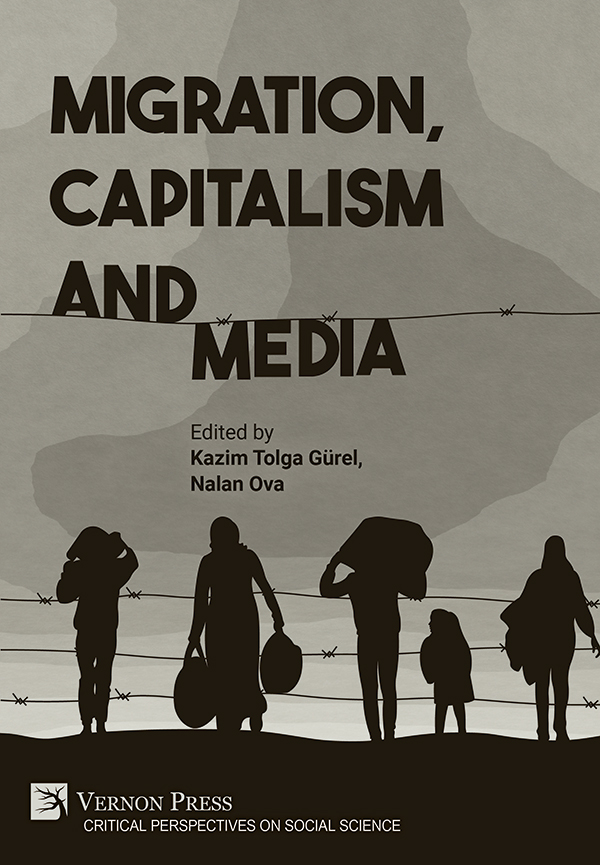
Edited by: Kazım Tolga Gürel and Nalan Ova (The Suleyman Demirel University, Turkey)
This study explores the intricate arrangements that serve the power and profit interests of the ruling classes. It examines how capital-driven approaches and life-colonizing construction goals form the backdrop to the events and analyses presented in these articles. Each contribution, regardless of its conclusion, begins with real-life experiences, interpreting specific theories and data through the lens of historical context. At the heart of the book lies the notion that all practices and elements of life are subject to colonization. Whether in the form of a nation-state or a party-state, the state functions as a power center shaping migration policies to serve ruling-class interests. The articles included were carefully selected by the editor. While some emphasize the concept of identity—an approach the editor may not fully endorse—these pieces were chosen to reflect a diversity of thought and to model the kind of genuine democracy that remains absent in today’s world. It is important to note that the book rejects any ideologies that violate human rights, such as fascism, racism, homophobia, misogyny, and xenophobia. This collection offers a compelling examination of themes including immigration, capitalism, and the media.

By: Kathryn Hummel (Birla Institute of Technology & Science, Pilani, KK Birla Goa campus, India)
'Udbhēda: Details of Bangladesh Life & Adda' recounts the lived experiences of three diverse individuals—Sampurna, Afreen and Nusrat—as related in conversation with the author. Framed by the methodology and methods of narrative ethnography, 'Udbhēda' describes the details that comment on or even challenge broad definitions and portrayals of Bangladesh and its people, particularly women and hijra. Beneath these narratives runs the author’s subjective account as a researcher, writer, cisgender woman and foreign visitor to Bangladesh. Evoking the everchanging scenes and moods of Dhaka, this multi-genre work combines prose, prose poetry and critical reflection to explore themes including gender, sexuality, class, family, education, work and postcolonial identity. This innovative approach to ethnographic writing embraces the cultural practice of adda—unbounded, often revelatory conversation—as both subject and method. 'Udbhēda' employs a considered, intersectional approach, relating perspectives frequently marginalised in discipline- and industry-specific discourse on Bangladesh, adding depth to the exploration of culture and identity beyond binaries. Balancing vivid storytelling with contemplative academic analysis, this book offers valuable insights for anthropologists, gender studies scholars and development practitioners. Hummel’s self-reflexive stance and exploration of the ‘illegitimate’ side of ethnography, in the tradition of Ruth Behar’s 'Translated Woman', make 'Udbhēda' an exemplary text for teaching qualitative research methods. The accompanying exegesis provides a transparent account of the author’s research process, engaging with crucial concepts in postcolonial theory, feminist ethnography and ethnographic representation. Accessible to both academic and general readers interested in innovative approaches to cross-cultural research and writing, 'Udbhēda: Details of Bangladesh Life & Adda' offers a layered interpretation of the testimonies of three remarkable people. It is a vital text for anyone seeking to look deeper at the complexities of gender, identity, culture and everyday life in contemporary Bangladesh.

By: Kurt Warner
The ancient Roman poet and satirist Juvenal stated that people were distracted by “bread and circuses” rather than engaged in their civic duty. Juvenal argued these bread and circuses, or basic needs and entertainment, consumed the thoughts and lives of the average Roman no matter what was happening in the Republic around them. The powerful political forces in society used many different forms of distraction to enable them to do what they wanted unimpeded by the masses. 'False Idols: How Diversion Is Destroying Democracy' picks up where Juvenal left off. The book is a journey through contemporary America and it illustrates how the concept of “bread and circuses” is as powerful and as relevant now as it was in the days of ancient Rome. It examines the deliberate distractions that are created by the cultivation of false idols. The distractions include the adoration of celebrities and parasocial interactions, the economic culture and the implicit belief systems contained within it, sports and the adoration of athletes, the political system and structure, the art, music, and literature we spend our time listening to and watching, the internet and social media that occupies so much of our time, and the video games that occupy the minds and much of the lives of so many people. As long as everybody is chasing and distracted by these bread and circuses, they are willfully negligent to the goings-on in the very fabric of the social network that is of our society, government, and country. The more negligent they become, the more the democracy continues withering and dying. This book systemically deconstructs a modern society that seems designed to consistently pull us away from rather than draw us toward the creation of a better existence for all.
By: Tiantian Chen (University of Cambridge)
This book provides the first sustained account of intense debates in China over the ban on single women’s access to assisted reproductive technologies (ARTs). Drawing on the author’s fieldwork in clinics and government agencies in Beijing, it mainly explains Chinese policymakers’ and clinicians’ rationale for restricting single women’s use of ARTs even if they celebrate ARTs as a success of Chinese modernization strategies. The main concept explored in this book is uncertainty. ARTs become a source of discomfort for the Chinese government and clinics because they reveal the uncontrollability of human destiny; they introduce ambiguities into genetic and legal paternity; and they undermine clinical and bureaucratic authority. This book uses ARTs as a lens on broader social changes in China. The uncertainty of ARTs reflects the limits of Chairman Deng Xiaoping’s reform. It also informs that the Chinese government has reversed policies by repackaging tradition and tightening party control. The book’s interpretation of uncertainty challenges the linear and progressive paradigm of modernization. China’s development path is distinct from the sequential logic of Western, modernist conceptions of history.
Edited by: Elaine P. Rocha (The University of the West Indies, Cave Hill Campus, Barbados)
Since the first contact with Europeans, the Americas have been a continent of immigrants as much as a continent of continuous migrations. Black migrations represent more than the transit of people between countries and regions and from rural areas to urban centers. It contributed to constructing networks that made survival possible, creating neighborhoods and cultural expression, impacting dietary habits, exchanging crops and agricultural techniques, and uplifting families from slavery and misery to ownership, education, and political representation. The most dangerous elements that moved from place to place with blacks were the ideas of freedom and citizenship. This book brings together articles from authors dedicated to the study of black migrations in diverse countries as well as in diverse historical periods to highlight that the movement of black people has been continuous over the centuries. Sometimes voluntarily, others coerced, people have moved from one place to another, carrying with them history and important cultural traditions such as language, music, and religion. Moreover, dangerous ideas of liberty and equality would spread through the African Diaspora. Ten authors from renowned universities contributed with their works on black migrations from a transnational perspective, exploring how people have transited between regions, countries, and continents, carrying their ideas, costumes, beliefs, and strategies for survival. In their trajectories, migrants built communities, created religions, musical traditions, languages, and much more. They influenced politics, contributed to revolutions and wars, to the economy, and shaped societies. For centuries, Latin America's official history has pushed black immigrants' histories to the margins, keeping them in the shadows and denying their importance in the construction of the modern world. The works brought together in this book aim to contribute to breaking this pattern, bringing the experiences of black migrants from the margins to the center.
By: Julio Marzán
Seventies “Hispanics,” identifying with Latin American emergence and increasing immigration to the U.S., adopted the epithet 'latino', soon written as Latino. Media fast-tracked, English Latino would eventually tilt presidential elections, advocate national programs, and protest policies, with native and immigrant subgroups presumed homogenous. Enunciated identically as 'latino' and presumed to be 'latino' or its exact translation, “Latino” proved to be a transliteration that since its coining started diverging from 'latino'. Latino became the political mask of unity over discrete subgroups; its primary agenda identity politics as a racialized, brown consciousness divested of its Hispanic cultural history. In contrast, 'latino' retains its Spanish transracial semantics, invoking an 'hispano' cultural history. Nationally Latino represents the entire Hispanic demographic while internecinely not all subgroups identify as Latinos. Latino is defined by immediate sociopolitical issues yet when needed invokes the 'latino' cultural history it presumably disowns. Intellectual inconsistency and semantic amorphousness make Latino a confusing epithet that subverts both speech and scholarship. Collective critical thinking on its semantic dysfunction, deferring to solidarity, is displaced with politically correct but circumventing tweaks, creating Latino/a, Latin@, Latinx. On the other hand, Latino exists because its time had come, expressing an aspiration for a more participatory identity in a multicultural America. Julio Marzán, author of 'The Spanish American Roots of William Carlos Williams', suspends solidarity to articulate the intellectual challenges of his Latino identity. Writing to academic standards in a style accessible to the general reader, Marzán argues that from 'latino' roots Latino evolved into an American identity as a demographic summation implying a culture that actually origin cultures provide, ambiguously an ethnicity and a nostalgic assimilation. “Latino” are American-germane sociopolitical extrapolations of 'latino' experiential details, the often-conflicted distinction illustrated in Marzán’s equally engaging essays that revisit iconic personages and personal events with more nuance than seen as Latino.
By: Abhisek Ghosal (BGR Campus, Bengaluru, India)
This monograph, 'Plasti(e)cological Thinking: Working out an (Infra)structural Geoerotics,' seeks to put forward ‘plasti(e)cological thinking’ as an advanced and ‘new’ epistemic framework which can facilitate readers to think beyond the stratified planetarity that ends up breaking the earth down into territories and strata, blocs and codes, fragments and pieces, ‘sides’ and ‘besides.’ ‘Plasti(e)cological thinking’ is at once grounded in the logics of ‘deterritorialization’ and ‘rhizomatics’ thereby calling the structured and well-thought-out ways of looking into planetary phenomena into question and at times contingent upon the pervasive trajectories of ‘zoe-politics’ which enables it to cut across varied segmentarities on the ‘Plane of Consistency’. Divided into three chapters, this book draws on critical theory, continental thinking, and certain Indian eco-texts to put a spotlight on the nuanced operation of ‘plasti(e)cological thinking’. In a nutshell, this book stands wedded to the production of the ‘new’ and is a contribution to the domain of planetary thinking.
By: Jon Dahlem (Bellevue University)
This book presents a case study of Island Marble Butterfly (IMB) conservation from an environmental sociological perspective. Using qualitative methods, the study explicates various social components of a collaboration of stakeholders working together to protect the species from extinction. Rediscovered in 1998 after being presumed extinct for nearly a century, the IMB persists exclusively among the San Juan Islands, WA, where the efforts of scientists, local conservationists, government employees, and non-profit organizations have sustained the species, even achieving a listing under the Endangered Species Act. For these reasons and many others, the IMB presents a case in some ways fascinating for its idiosyncrasies and in other ways indicative of broader trends in conservation work in an era of rapid global biodiversity loss. From the study emerges a call for increased sociological research that contributes knowledge beneficial to conservation practice, or what the book calls “conservation sociology.” The book reviews existing literature in this space and provides a framework for constructing research, theory, and application in conservation sociology. As the social components of IMB conservation are explored, so too are components of conservation sociology. The book describes competing norms and beliefs among IMB stakeholders, demonstrating the capacity of conservation sociology to describe and interpret social phenomena in conservation work; explores power dynamics in the collaboration, using sociological theory to interpret significant events in IMB conservation; and analyzes the significance of time in IMB conservation while providing suggestions for applied conservation work based in sociological perspectives. The book accomplishes three main goals. First, it provides an account of details and events in Island Marble Butterfly conservation. Second, it defines, positions, and develops conservation sociology. Third, it demonstrates original research in conservation sociology, resulting in a deep look at the complexities of the social components of species conservation.
By: Giulia Lasagni (Europa-Universität Flensburg, Germany)
"Dimensions of Shared Agency" investigates the way in which standard philosophical accounts have been dealing with the issue of collective actions. In particular, the book focuses on the ‘Big Five’ of analytical social ontology (namely, Michael Bratman, Margaret Gilbert, Philip Pettit, John R. Searle and Raimo Tuomela) and their accounts of shared/collective intentions and actions. Through systematic readings of different positions in the debate, the author proposes original ways of analyzing and classifying current theories of shared agency according to whether they advance a member-level or a group-level account of shared agency. While member-level accounts (MLA) are theories of shared agency based on individuals’ attitudes and actions, group-level accounts (GLA) give attention to the group of individuals considered as a whole, i.e., as an agent itself. Criticism arises against the idea that the Big Five have proposed stable group-level accounts suitable for explaining the case of shared agency as a group-level phenomenon. The widespread tendency in the debate is to endorse a perspective called holistic individualism, which maintains that high-level explanations are objective even though social facts are ontologically reducible to facts about individuals. Lasagni argues that as long as holistic individualism is held, the GLA is reducible to the MLA because holistic individualism upholds ontological individualism based on a deep individualistic premise, fixing the special status of individual agents as natural persons. The premise makes the claim to treat groups as agents contradictory to the general framework of the theory. This book profiles an alternative interpretation according to which agency should be considered as a functional kind, which is equally instantiated by different systems, such as individual human beings and organized social groups. In this way, the author claims, the reduction of the social can be avoided. "Dimensions of Shared Agency" will be of interest to doctoral students, researchers, and scholars interested in social ontology and the philosophy of the social sciences. It can also be utilised as supplementary reading or an introduction to philosophy students and scholars who are first approaching the philosophy of collective intentionality and shared agency.