Loading...
Please wait while we load the content...

Loading...
Please wait while we load the content...
Stay informed about our latest publications, calls for proposals, author news, events, and special announcements.
Join our community of scholars, librarians, authors, and readers and receive the latest updates from Vernon Press directly in your inbox.



Availability
Available through resellers
ISBN
9781648892752
Edition
1
Publication Date
September 7, 2021
Physical Size
Illustrations
20 B&W
Number of Pages
251
Currency
Quantity
The discussion about such a complex topic as arts at the margins, their relation to the global art market and the violence that occasionally marks this relationship – be it as exclusion, as a medium of arbitrary hierarchization, or appropriation – is manifold and highly interesting.
In their contributions, the authors and editors address the extraordinary heterogeneity of the arts – ranging from textiles to masks, statues, paintings, theatre performances and poems: for a long time many of these arts have been (and some still are) assigned to “folk” art and not to art. The contributions show that and how these categorizations can no longer be justified – especially since aesthetic categories can no longer be thought of as universal. Based on field research all over the world (New Zealand, Australia, Japan, Indonesia, India, Rwanda, Martinique, Brazil), the authors analyse art production in all its facets: including social/cultural embeddedness, political conditions, geographical features, historical formations as well as changing perception patterns of local producers as well as the global actors of the art world.
In short, they prove the power of art production as well as of the works and their extraordinary agency. The analyses refer to important theoretical approaches of the anthropology of art, above all, to Alfred Gell's approach developed in 'Art and Agency'. Inspired by this, concepts such as Andrea Grieder's “poetic efficacy” are generated. New concepts such as Gita Wolf's “symbolic inversion” are also created. The benefit of reading these differentiated and empirically grounded contributions lies in the aesthetic richness they convey, in the possible transformations they suggest in a wide range of local as well as translocal settings, and finally, in furthering the approach of unraveling dichotomic thinking in the field of arts as well.
Dr Anna Schmid
Director of the Museum der Kulturen Basel, Switzerland
[...] All chapters in the volume demonstrate the epistemological relevance of the idea of “margins,” be it by asking where they are to be located, who determines or redetermines them, or whether a particular attention to them may transform them, their aesthetics and potential, their strength and power, which should not be underestimated. Margins, or peripheries, however conceived, may be described as a zone for demarcation, for transgression, for resistance, as dynamic spaces highlighting– if by contrasting and challenging them – conventions and norms. Precisely because they can be constructed and indeed are constructed, and this by different actors with different agendas, “margins” can open thinking spaces. [...]
[Extract from book review appearing at the journal 'Anthropos', 118.2023.1., pp. 226-228. Reviewer: Paola von Wyss-Giacosa]
Discover books that expand on the themes explored in this work—titles that engage with similar questions, intersecting disciplines, and complementary perspectives to deepen understanding and broaden the conversation.
Browse all titles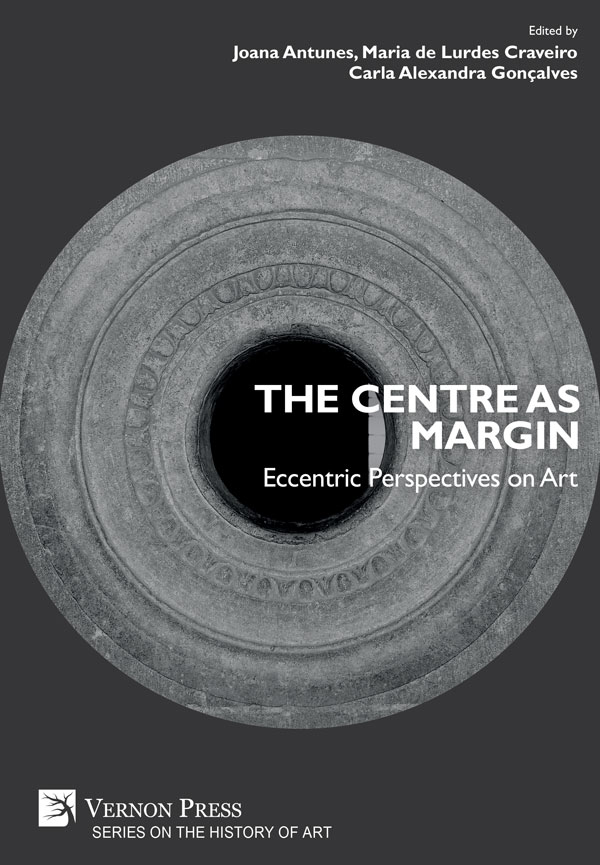
Joana Antunes, Maria de Lurdes Craveiro, and Carla Alexandra Gonçalves (Eds.)
View more