Loading...
Please wait while we load the content...

Loading...
Please wait while we load the content...
Stay informed about our latest publications, calls for proposals, author news, events, and special announcements.
Join our community of scholars, librarians, authors, and readers and receive the latest updates from Vernon Press directly in your inbox.

Availability
Available through resellers
ISBN
9798881903145
Edition
1
Publication Date
June 10, 2025
Physical Size
Illustrations
21 B&W
Number of Pages
430
Currency
Quantity
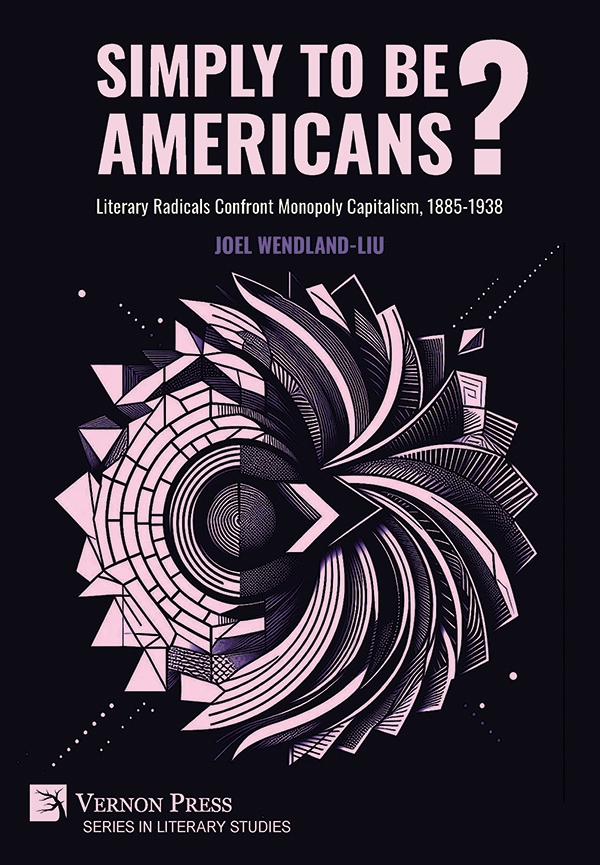
Wendland-Liu deftly navigates decades of radical literary figures who struggled with the question of “what is an American?” during a defining era of American monopoly capitalism, imperialism, and racial and class subjugation. A work of theory, literary analysis, history, and social commentary, “Simply to Be Americans?” re-imagines American literary icons while introducing audiences to lesser-known authors and thinkers who, undaunted, forged a revolutionary social tradition that continues to demand more of our shared cultural identity of “American.” “Simply to Be Americans?” is an important addition to revolutionary’s library.
Prof. Dr. Melissa Ford
Slippery Rock University
“Simply to Be Americans?” is a wide-ranging and sensitive investigation of different strands of U.S. literary radicalism that critiqued monopoly capitalism through the adoption or rejection of different modes of being "American" in the late nineteenth and early twentieth centuries. Wendland-Liu excels in close readings that give new insights into texts that we thought we knew and put those texts in discussion with others we may not have considered before.
Prof. Dr. James Smethurst
W.E.B. Du Bois Department of Afro-American Studies
University of Massachusetts-Amherst
Joel Wendland-Liu picks up the gauntlet thrown down by W.E.B. DuBois in the ambitious cultural history, “Simply to Be Americans?”. DuBois posed the question at an NAACP dinner in 1926 of whether his audience aspired simply to be Americans or sought a more emancipatory future. DuBois answered the question with a resounding no, to be simply American on its terms would never suffice. “’America,’” as Wendland-Liu describes, “configured as a collectivity composed of white, racially pure human beings, although fraught with the presence of non-beings, substantiates, mystifies, and fetishizes racial whiteness as a metonym for the perfectible nation, state power, and ‘bad faith’ required by 100% Americanism” […]
Wendland-Liu places in conversation a wide range of radical authors and their literary production between 1885 and 1938 to develop the deeper, and more difficult answer to DuBois’s question. […]
Each chapter skillfully weaves together close readings of several authors on key themes of fugitivity, anti-patriarchy, anti-capitalism, anti-Black and anti-immigrant racism. […]
The answers to DuBois’s challenge from 1926 are still resonant one hundred years later. […]
These are all current debates and answers, ones we join in today’s politics. […]
[Extract from book review at the journal ‘Socialism and Democracy’, Vol. 40, No. 2, 174–177. (Published online on 18 Aug 2026). Reviewer: Elisabeth Armstrong (Smith College, Northampton, MA). https://doi.org/10.1080/08854300.2026.2710485]
Discover books that expand on the themes explored in this work—titles that engage with similar questions, intersecting disciplines, and complementary perspectives to deepen understanding and broaden the conversation.
Browse all titles
Peter Swirski and Tero Eljas Vanhanen (Eds.)
View more
Eulalia Piñero Gil and María Laura Arce Álvarez (Eds.)
View more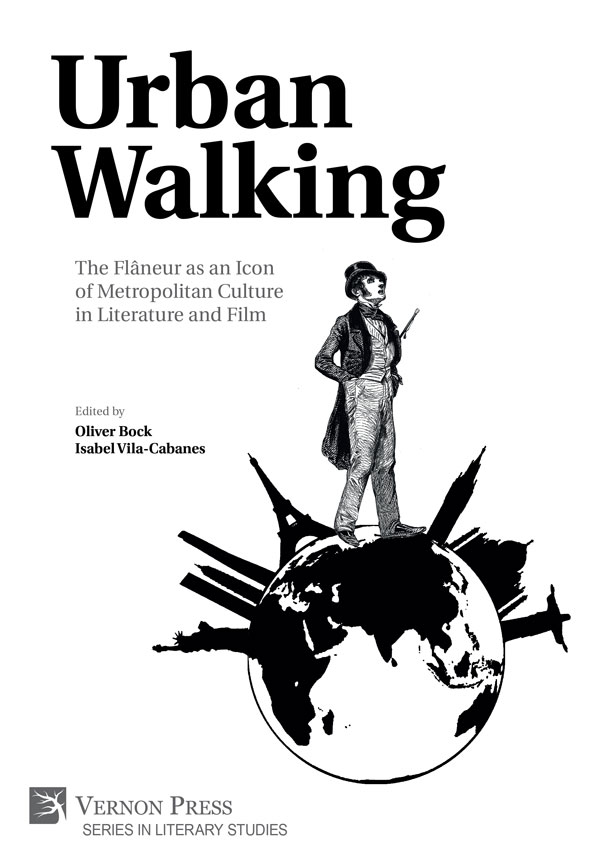
Oliver Bock and Isabel Vila-Cabanes (Eds.)
View more
William G. Welty (Ed.)
View more