Loading...
Please wait while we load the content...

Loading...
Please wait while we load the content...
Stay informed about our latest publications, calls for proposals, author news, events, and special announcements.
Join our community of scholars, librarians, authors, and readers and receive the latest updates from Vernon Press directly in your inbox.


Availability
In stock
ISBN
9781648891809
Edition
1
Publication Date
January 3, 2023
Physical Size
236mm x 160mm
Number of Pages
518
Currency
Quantity
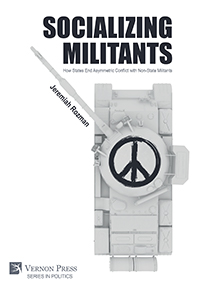
In this important book, Dr. Jeremiah Rozman advances a rationalist framework for countering violent non-state opponents. The study proceeds from the observation that there has been considerable variation in different governments’ responses to violent, non-state actors even when such factors as the relative balance of power, the ideological makeup of the government, and the nature of both the domestic and international political climates are taken into account. In this subtle, comparative work, Dr. Rozman advances the argument that the effectiveness of bargaining-based approaches on the part of governments depends especially on the ‘type’ of violent non-state actor that is opposed to it. That is: How intense is the ideological mission of the violent non-state actor? Has the violent non-state actor been making a serious effort at governing territory? How targetable is the leadership of the violent non-state actor? Different kinds of violent, non-state opponents require different kinds of governmental policies in response. In order to assess the applicability of his analytical approach, Mr. Rozman executes a series of intensive case investigations, reinforced by interviews with many of the principals involved, of three major sets of cases: (1) the United States against al-Qaeda and the Taliban; (2) Israel against the PLO, Hezbollah, and Hamas; and (3) Russia in the two wars of Chechen secession (1994-96, 1999-2001). In the final substantive chapter, Dr. Rozman engages in a stimulating and wide-ranging discussion that applies his findings to a wider universe of instances, from the British in Palestine and against the IRA, respectively; the United States against the Vietcong, Turkey against the Kurdistan Workers Party, post-1992 Algeria, etc. Dr. Rozman’s book is as valuable to the students and scholars of international security affairs as it is to policymakers of democratic and non-democratic states alike.
Dr. Allen Lynch
Professor, College of Arts and Sciences
Department:Department of Politics
University of Virginia
Discover books that expand on the themes explored in this work—titles that engage with similar questions, intersecting disciplines, and complementary perspectives to deepen understanding and broaden the conversation.
Browse all titles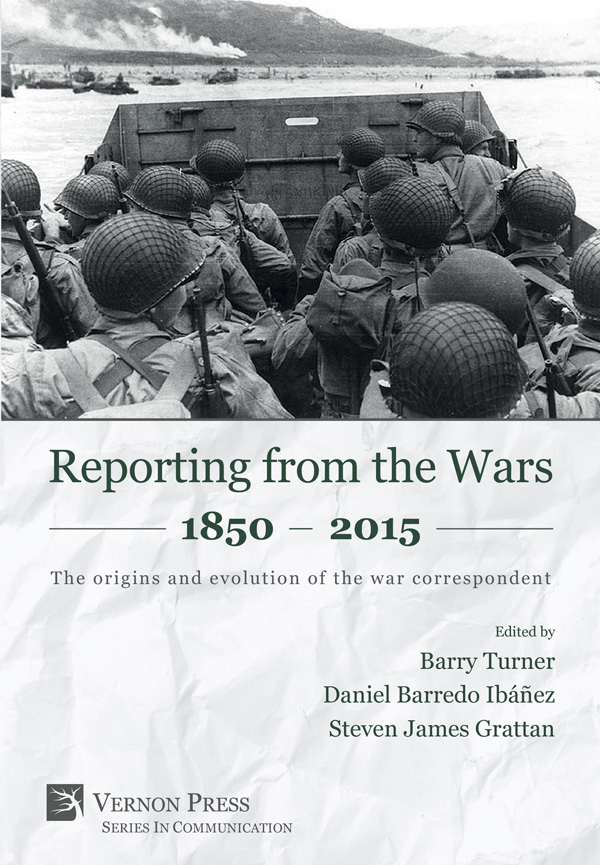
Barry Turner, Daniel Barredo, and Steven James Grattan (Eds.)
View more