Loading...
Please wait while we load the content...

Loading...
Please wait while we load the content...
Technical University of Cluj-Napoca, Romania; Baia Mare Northern University Centre, Romania
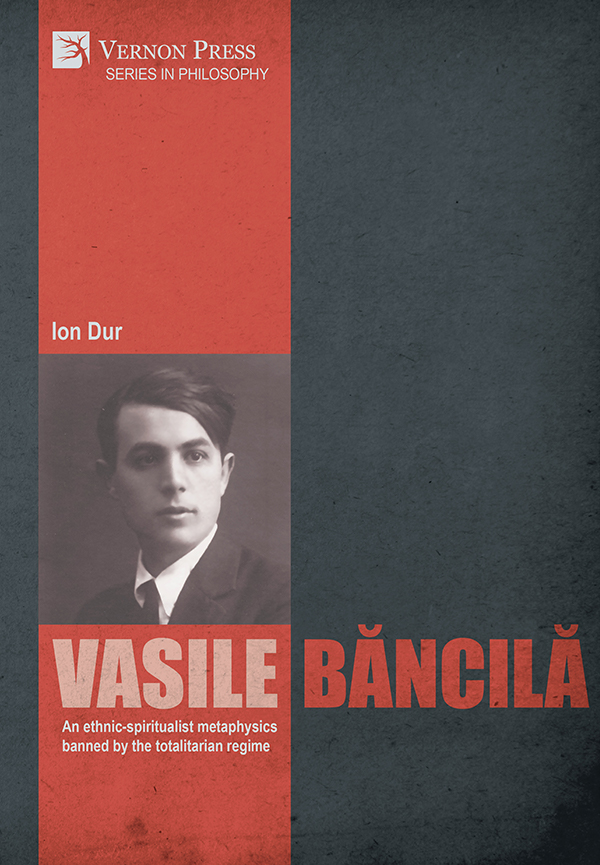
By: Ion Dur
This book is a rediscovery and examination of the thinking of Vasile Băncilă, a philosopher forbidden by the totalitarian regime of Nicolae Ceaușescu. The philosopher Lucian Blaga saw Băncilă as a threat to the spirit of the highest Romanian culture. It is estimated that Băncilă’s work extends to 32 volumes, 17 of which have been published so far. With such a significant opus, Vasile Băncilă is, indisputably, a key figure in contemporary Romanian culture, particularly in the sphere of philosophy. The book has eleven chapters and is divided into two parts. The first part deals with the hermeneutics of the author’s youthful works. His reflections on the purpose of philosophy for life are important, about the role of this discipline in the education of adolescents and students, the relationship between irony and education, his thoughts of one of the greatest Romanian poets, Mihai Eminescu, and the philosophy of Descartes and of Schopenhauer. In the second part, the book looks at Băncilă’s aim of structuring a possible system of philosophy; more precisely, an ethnic-spiritualist metaphysics which, when it was elaborated, contradicted the official ideology of the totalitarian regime. Finally, the book covers the philosopher’s work, analysing step-by-step the relation between the part and the whole (pars pro toto), as well as between existence and metaphysics, and the philosopher’s conclusions about Romanian existence.
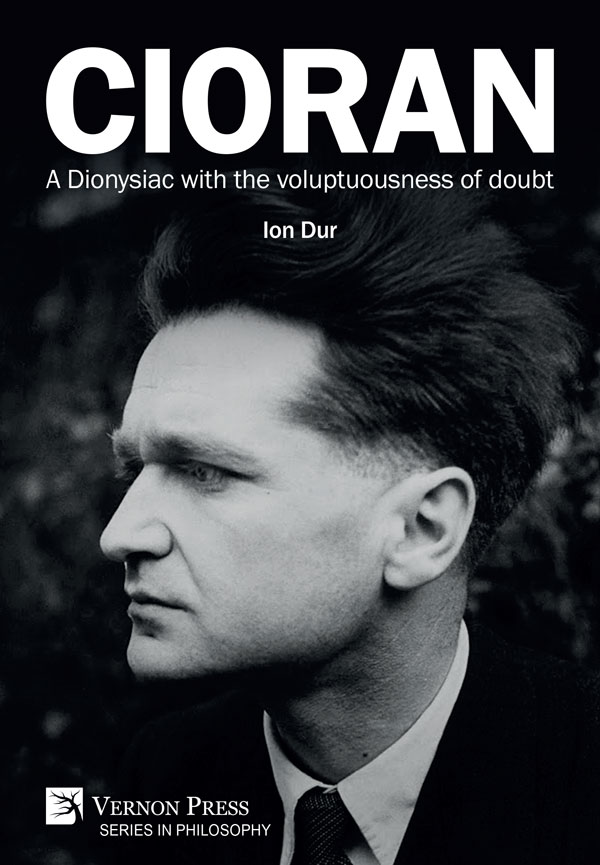
By: Ion Dur
Since its inception philosophical thought has been fixated by death. Death, as much as life, has been the unrelenting driving force behind some of history’s greatest thinkers. Yet, for Emil Cioran, a Romanian-French philosopher, even philosophy cannot attempt to understand nor contain the inevitable unknown. Considered to be an anti-philosopher, Cioran approached and reflected on the human experience with a despairing pessimism. His works are characterised by a brooding, fatalistic temperament that reveals and defines itself in his irony, black humour and inimitable style. Although Cioran’s later works have received much scholarly recognition, little attention has been paid to the texts he wrote in his adolescent. Grounded in the historical context of interwar Romania, this book presents for the first time an analysis of the little-known works of this pioneering Romanian thinker. Deeply affected by his upbringing, this book offers a glimpse into Cioran’s first attempts to delve into philosophical enterprise, before turning its attention to his later works, On the Heights of Despair (1934), The Transfiguration of Romania (1936) and Twilight of thoughts (1940; written in France). Using both the French and Romanian editions of these works, but also their original manuscripts, this volume seeks to provide a re-reading that takes language rather than a social or political critique as its focal point. As an important and provocative contribution to the existing literature on Cioran, this book will be an essential point of reference for students and researchers, alike.