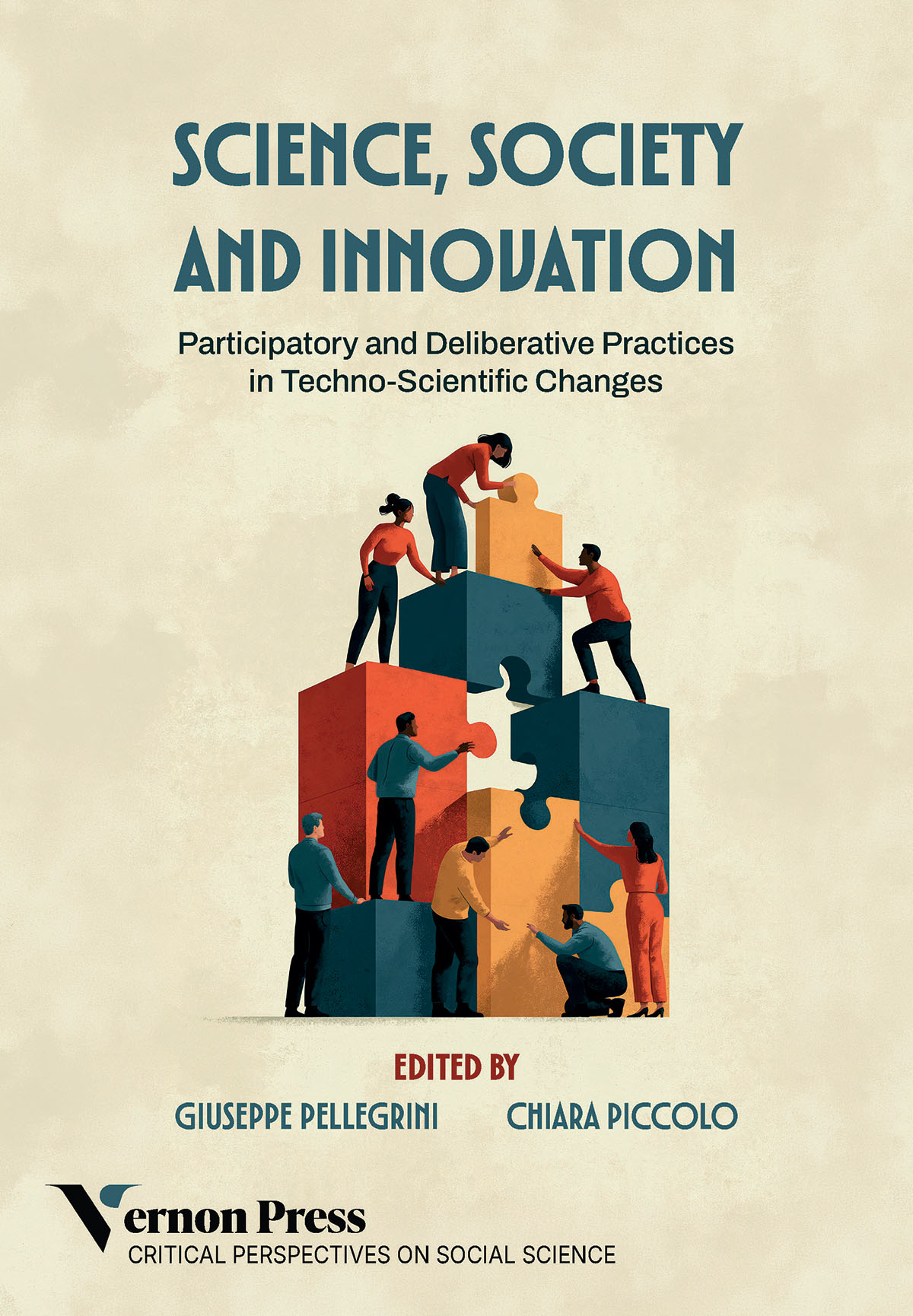
Hardback
Science, Society and Innovation
Participatory and Deliberative Practices in Techno-Scientific Changes
By: Piotr Stankiewicz, Elisabeth Frankus, Julian (Iñaki) Goñi, Erich Griessler, Jose A. Guridi, Franziska Mey, Rodolfo Lewanski, Nithin Monteiro SJ, and Jacek Sroka
In modern societies, rapid scientific and technological change is deeply intertwined with human action, creating demand for public engagement to ensure democratic legitimacy and social robustness. Innovation is a complex, multidirectional process shaped by social, cultural, and political factors. This book examines citizen engagement in science and technology, asking how much room exists for it, what forms of democracy support it, what practices exist, and what impacts they have.
Using case studies from Europe, Chile, and India, the book explores participatory and deliberative processes—such as citizens’ assemblies, energy transition initiatives, and AI governance—arguing that traditional representative democracy is insufficient for governing technoscientific challenges. It highlights the potential of these practices to foster mutual learning, reflexivity, and socially robust innovation. Key pillars include actors, communication processes, and evaluative dimensions. Case studies reveal both strengths (e.g., enhanced relevance, knowledge democratization) and weaknesses (e.g., power imbalances, tokenism).
The book serves as a practical guide to distinguishing genuine participation from opportunistic use, offering conditions for effectiveness such as resources, trust, and recognizing citizens as active co-creators. Ultimately, it aims to provide a nuanced overview of strategies, outcomes, and contradictions in this evolving field.