Loading...
Please wait while we load the content...

Loading...
Please wait while we load the content...
University of Porto, Portugal
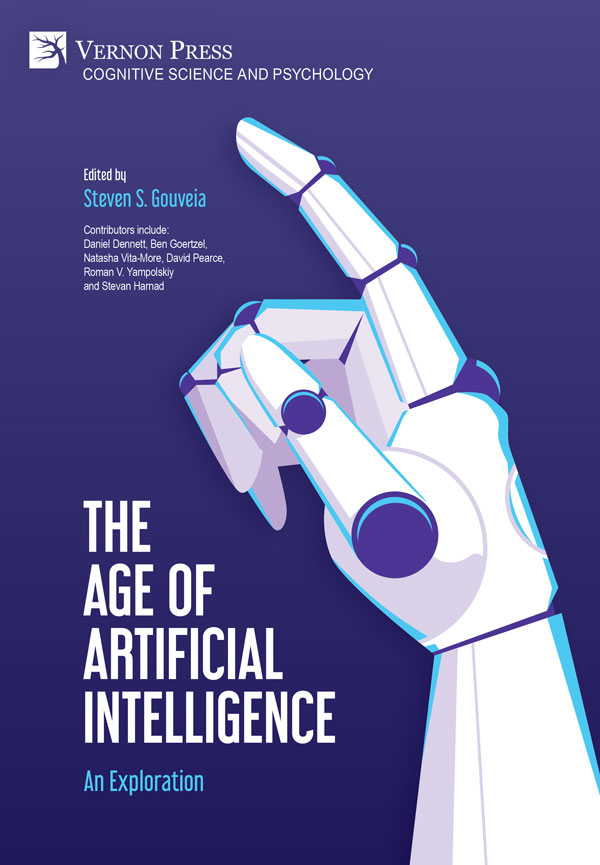
By: Kulvinder Panesar, Tomislav Miletic, Aníbal M. Astobiza, Ricardo M. Ferrer, Stephen Rainey, Natasha Vita-More, Federico Piston, Hasse Hämäläinen, Vernon Vinge, Eray Özkural, Txetxu Ausin, Frederic Gilbert, Federico Pistono, Mariana Chinellato Ferreira, René Mogensen, Caterina Moruzzi, Nicole A. Hall, Cody Turner, Ben Goertzel, Gabriel Axel Montes, David Pearce, Daniel Dennett, Stevan Harnad, Roman V. Yampolskiy, Soenke Ziesche, Peter A. DePergola II, and Steven S. Gouveia
With worldwide spending estimates of over $97 billion by 2023, it is no surprise that Artificial Intelligence (A.I.) is one of the hottest topics at present in both the private and public spheres. Comprising of vital contributions from the most influential researchers in the field, including Daniel Dennett, Roman V. Yampolskiy, Frederic Gilbert, Stevan Harnad, David Pearce, Natasha Vita-More, Vernon Vinge and Ben Goertzel, ‘The Age of Artificial Intelligence: An Exploration’ discusses a variety of topics ranging from the various ethical issues associated with A.I. based technologies in terms of morality and law to subjects related to artificial consciousness, artistic creativity and intelligence. The volume is organized as follows: Section I is dedicated to reflections on the Intelligence of A.I., with chapters by Soenke Ziesche and Roman V. Yampolskiy, Stevan Harnad, Daniel Dennett and David Pearce. Next, Section II discusses the relationship between consciousness, simulation and artificial intelligence, with chapters by Gabriel Axel Montes and Ben Goertzel, Cody Turner, Nicole Hall and Steven S. Gouveia. Section III, dedicated to aesthetical creativity and language in artificial intelligence, includes chapters by Caterina Moruzzi, René Mogensen, Mariana Chinellato Ferreira and Kulvinder Panesar. The subsequent Section IV is on the Ethics of the Bionic Brain with the participation of Peter A. DePergola II, Tomislav Miletić and Frederic Gilbert, Aníbal M. Astobiza, Txetxu Ausin, Ricardo M. Ferrer and Stephen Rainey and Natasha Vita-More. Finally, Section V follows on the Ethics of Artificial Intelligence with chapters by Federico Pistono and Roman V. Yamploskiy, Hasse Hämäläinen, Vernon Vinge and Eray Özkural. The Age of Artificial Intelligence is imminent, if not here already. We should ensure that we invest in the right people and the right ideas to create the best possible solutions to the problems of the present and prepare for those of the future. This edited volume will be of particular interest to researchers in the field of A.I. as well of those in Cognitive Science (Philosophy of the Mind, Neuroscience, and Linguistics), Aesthetics and Arts, Applied Ethics and Political Philosophy / Law. Students studying the aforementioned topics can also benefit from its contents.
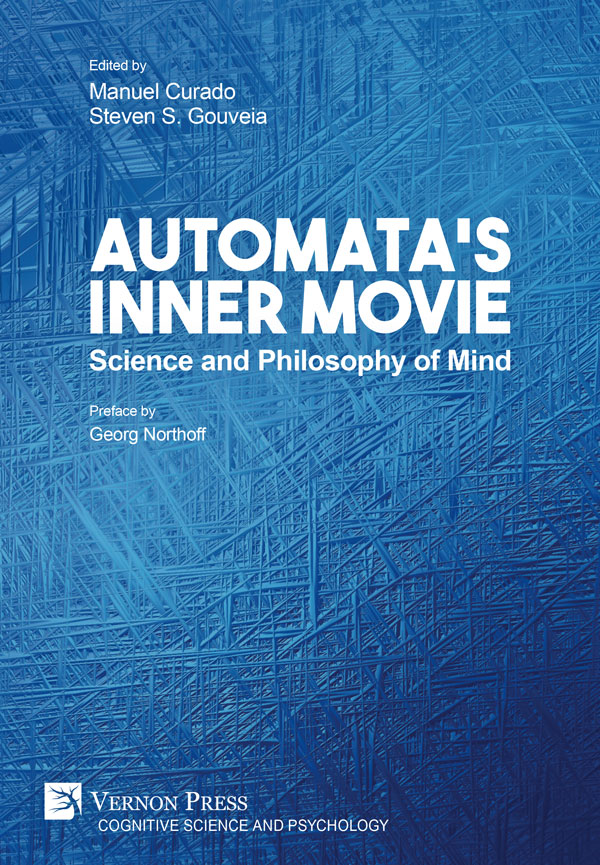
By: Manuel Curado, Steven S. Gouveia, Igor F. Mikhailov, Manuel Cebral, Liat Lavi, Andrea Roselli, Alexander Lazarov, Paulo Vieira, Judite Zamith-Cruz, Hugo Neri, Veridiana D. Cordeiro, Maiya Jordan, Sami Nenno, Eros Moreira de Carvalho, Hortense de Villaine, Ivan V. Ivanov, Zong Ning, Federico Zilio, Nathália Pantaleão, Nicolás F. Lori, Emilia Samit, German Picciochi, and Paulo Jesus
This book brings together researchers from a variety of fields to jointly present and discuss some of the most relevant problems around the conscious mind. This academic plurality perfectly characterizes the complexity with which a current researcher is confronted to discuss and work on this topic. The volume is organized as follows: Part I introduces the general problems of Philosophy of Mind and some historical perspectives. Part II focuses on understanding the input that the empirical sciences can offer to the theoretical problems. Part III discusses some of the core concepts of the field, namely, perception, memory and experience. Part IV debates human and artificial intelligence and, finally, Part V deliberates about the computation and the ethics of big data and artificial intelligence. The book contains valuable material for researchers in several fields such as Cognitive Science and Neuroscience, Psychology and Artificial Intelligence, and Philosophy. It can also be used as a guide to some courses at various levels, from BAs to MAs and PhD courses of several fields. It is our belief, as it is claimed in the preface by Georg Northoff, that there is an urgent need for a truly transdisciplinary exchange between philosophy and the sciences in order to stimulate some real progress. We hope that this book will become a sound step for such an interdisciplinary enterprise.