Loading...
Please wait while we load the content...

Loading...
Please wait while we load the content...
Capilano University
By: Ángel L. Martínez, Adrian Downey, Nicole D. Morris, Robert Nellis, Daniela Elza, Marcy Meyer, Adam Garry Podolski, Wanda Campbell, Joseph Naytowhow, Kathryn Ricketts, Will Morin, Jan Buley, Paula Aamli, Holly Tsun Haggarty, Maya T. Borhani, Emma Green, Anita Lafferty, Margaret McKeon, Natalie Honein, Adam Vincent, Sarah MacKenzie-Dawson, Andrejs Kulnieks, Sandra Filippelli, Alexandra Fidyk, and Pauline Sameshima
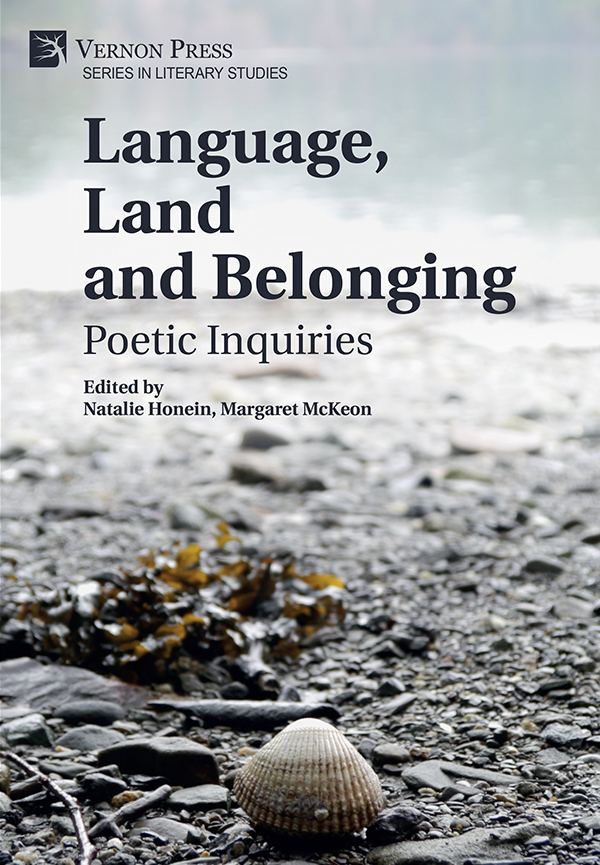
This volume takes up themes emergent from the 7th International Symposium on Poetic Inquiry (ISPI) which invited participants to reflect on the United Nations Declaration of 2019 as the International Year of Indigenous Languages. In this refereed collection, Indigenous and non-Indigenous authors use poetic inquiry to explore the importance of their ancestral languages and lands, and consider the Indigenous languages and peoples of the lands where they live. Situated in diverse global contexts, poet-researchers examine the intersectionality of their languages, their lands, and their sense of belonging. They offer relational understandings of, and articulate obligations for, their environment and communities. Through stories of shared generational pain and renewal, each author brings the reader into their world of learning and growth. They do this through discourses of belonging and relational responsibilities that tie them to a place, a genealogy. As a method of study that incorporates poetry into academic research, poetic inquiry is concerned with particularity, complexity, and transformations. Making research more visceral and evocative, it invites researchers to examine and engage with the knowledge they seek through a continual process of questioning, welcoming, and awareness. In this volume, poetic inquiry helps to honor languages and histories taken for granted; it allows looking back in order to reexamine, redefine, and make sense of the present and its shortcomings while reimagining a different future. This work seeks to reclaim, through poetic inquiry, wisdom of language, land, and belonging.

By: Adam Vincent
This book identifies and describes facets of poetic inquiry, a research method/methodology/tool that uses poetry in the research process (information gathering, analysis and/or dissemination). Specifically, this book explores how and why it is in use, provides revelations around its unparalleled function(s) in research, and presents an exemplification of a close reading approach, trialled in the study framed in the book, that can draw further knowledge from the products of poetic inquiry studies. Poetic inquiry studies are somewhat established, and their findings are being published in academic journals and books however, poetic inquiry is currently undertheorized and noticeably missing from notable research methods textbooks and publications that discuss the merits of arts-based research. This may have the negative result of knowledge being lost or overlooked that could hold answers to previously unanswered questions that exist across the disciplines. In response to this problem, this book (drawing from the doctoral research study therein), highlights poetic inquiry’s theoretical underpinnings and pragmatic uses in research and scholarship that can be adopted and adapted by new and established scholars. This is done using the tenets of poetic inquiry as a frame and includes in-depth literature review and an exploration of the findings of interview with four notable poetic inquiry scholars in education in Canada. Detailed profiles for each participant have been created to analyze and emphasize their distinctive poetics and approaches to scholarship. Lastly, this book considers ways that poetic inquiry can inform teaching practices, as poetry is seen to permeate the participants’ lives and influence their approaches to teaching at the post-secondary level. This book is written for both early career and well-established scholars who have an interest in exploring ways that poetic inquiry (which marries art and epistemology) can enhance their research and teaching practices.